(vogue.sg)
When Amanda Nguyen’s smile pops up on my laptop screen, she is on her second hour of a long car ride in Vietnam, en route to Sa Pa for a birthday trip. The Nobel Peace Prize nominee turns 34 in less than a week and she is in high spirits.
“I just left a meeting with the deputy foreign minister of Vietnam,” she tells me. “I opened by giving him a pin I had flown into space with, then immediately launched into talking about the rights of sexual violence survivors.”
In 2013, while a student at Harvard University, Nguyen was raped. At the hospital, she underwent another ordeal: flurries of paperwork, invasive medical tests and an administrative nightmare of ludicrous proportions. The only piece of information which brought some hope was that in Massachusetts, the statute of limitations for prosecuting rape was 15 years.
It meant that Nguyen—then just 22, three months from graduating and without the resources to enter a lengthy, emotionally devastating trial for a crime which had a one percent conviction rate—could choose to store her rape kit anonymously. This would buy her some time, allow her to come up with a plan on her own terms and perhaps stop one horrific incident from derailing the course of her life forever.
That is, until she was confronted with another horrifying reality: in six months, her rape kit would legally be destroyed without notification. With it would vanish her chance of getting justice.
“It was my first taste of a truth that I now know well,” Nguyen says. “Historically and to this day, the legal system has often benefited the perpetrator far more than the survivor.”
As she recounts the aftermath of trauma, Nguyen is remarkably composed. Her natural, infectious effervescence has permeated all our encounters, including an intimate fireside chat hosted in July for an audience of women from Singapore and Southeast Asia. During the conversation, she spoke candidly about, among other subjects, finding hope.
An attendee from Malaysia approached us after the event, introducing herself as a fellow survivor before clasping Nguyen’s hands, blinking back tears, thanking her over and over.
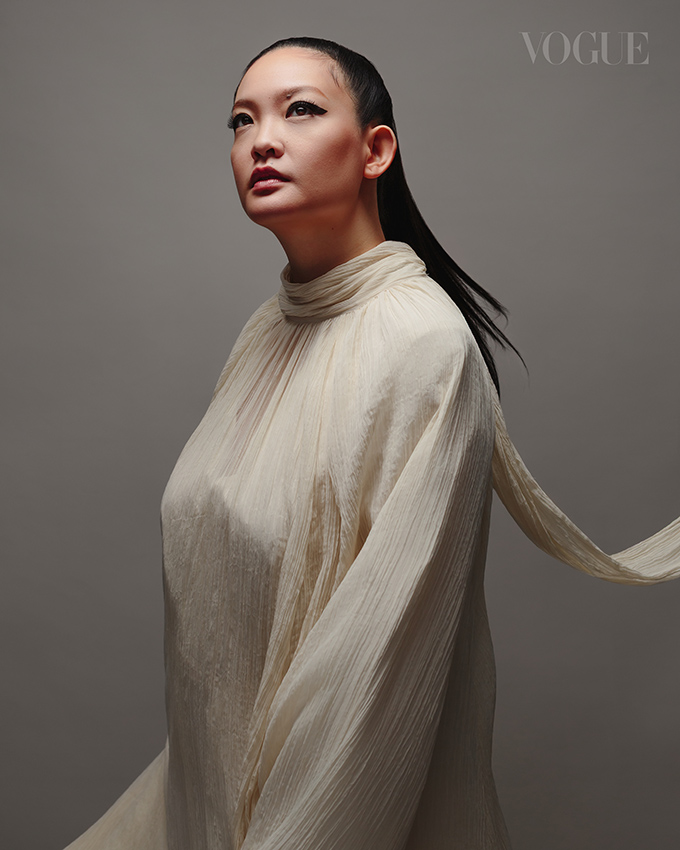
In 2014, Nguyen founded Rise, a non-profit organisation championing the rights of sexual assault survivors. The group’s first landmark accomplishment came just two years later: the Sexual Assault Survivors’ Bill of Rights, which Nguyen had drafted, was passed unanimously through the US Congress.
In the decade that has gone by, Nguyen has steered Rise’s group of volunteers to almost unbelievable achievements in an area of advocacy that is notorious for being emotionally fraught and infrastructurally demanding. To date, the group has passed 114 similar laws across the globe, including a historic United Nations resolution in 2022. In the midst of global turbulence and highly charged culture wars, how does she keep the engine going?
“At Rise, we have a specific definition of success: passing the Sexual Assault Bill of Rights around the country and the world,” Nguyen says when I ask about how she deals with activism burnout. “What that does is give them a clear pathway to how much energy they need to invest and exactly the return they can expect to see.”
Through Rise, Nguyen has found a novel way to make survivor advocacy sustainable: modelling it after a tech accelerator. “Each incoming organiser is paired with a coach—a former Rise volunteer who has ‘won their game’ or passed their law. They return to Rise to guide other volunteers and to show them that, even though this seems like an issue so huge you should have no idea where to start, there are pathways that have worked for us over and over again.”
“To me, there are two things on Earth which are close to magic. One is science. The second is seeing someone who cares deeply about survivor rights watch the law that they wrote get passed. It’s extraordinary.”
At Rise, volunteers are met with fixed tenures and tangible goalposts—making way for breathing room before they get back in the game. “At the end of the season in June, whether or not you have passed your law, you’re done for the moment. We’re strict about that. And you can choose to leave Rise forever or you can choose to return next November. Because we give these boundaries, everyone involved gives it their all.”
Nguyen’s eyes sparkle as she describes watching volunteers reach the heights of their advocacy. “To me, there are two things on Earth which are close to magic. One is science. The second is seeing someone who cares deeply about survivor rights, perhaps because they have a personal tie to it, standing next to the governor and watching the law that they wrote get passed. It’s extraordinary.”
If I had to pick a third instance of magic, it might be Nguyen herself. In the 12 years since her assault, she has become a fearless, relentless voice of her generation. She has created new pathways to pour collective frustration into tangible, strategic action— successfully remaking broken systems from the inside out. All the while, she has kept the spotlight pointed firmly at survivors, allowing us to come to the fore, tell our stories and demand justice on our own terms.
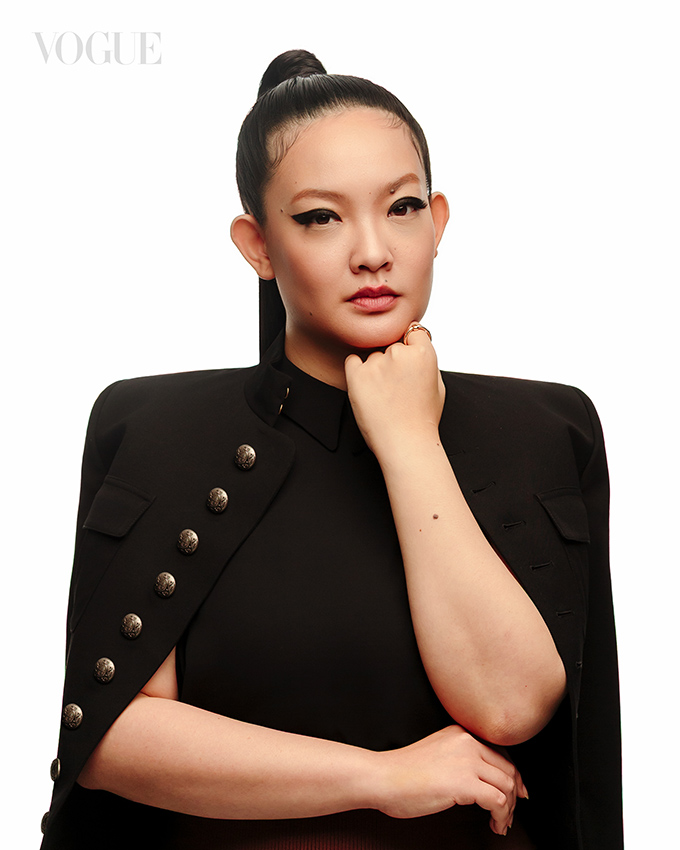
In April, Nguyen went to space aboard Blue Origin’s New Shepard suborbital space mission. On the flight, she conducted bioastronautics experiments designed to push the boundaries of women’s health research. This included testing material for wound dressing in microgravity, which has practical applications for better understanding menstruation in space.
Nguyen explains: “Up till this point, most female astronauts going on long space missions are only given the option to take birth control and just stop menstruation. Obviously, and as anyone who has taken birth control knows, it comes with enormous side effects. In microgravity, hormonal changes affect so much, including bone density and osteoporosis.
“On top of that, the research that we do in space always has an implication for people on Earth. The research on material science for menstruation is sorely incomplete. Tampons were not even being tested with blood until recently. Only in 2023 did they stop using water and saline.”
As the first all-female crew in history (and with several celebrities on board), the Blue Origins space flight attracted rarefied publicity far beyond the average expedition. This, Nguyen only had one use for: to convert into access for her and Rise into diplomatic offices, ministerial meetings and forums where policy is made.
In July, Nguyen met with Võ Thị Ánh Xuân, the vice president of Vietnam, and presented Vietnamese lotus seeds she had flown into space with—both a symbolic gesture and useful for post-flight research to study how space conditions affect plant growth. “The day that we met was the exact day of the 30th anniversary for the reunion of relations between the United States and Vietnam. That meeting was a literal symbol of reconciliation between the two countries that make up my identity—it was incredibly meaningful,” Nguyen says.
During the meeting, Nguyen also spoke about a pivotal global treaty Rise has been advocating for: universal jurisdiction for sexual violence. For months, Nguyen has been meeting with world leaders to get their sign off on the treaty so that it may be ratified.
She says: “Some crimes are so heinous that they cross borders, meaning that perpetrators may flee the country but they must be extradited. This includes murder and drug trafficking, but rape and sexual violence are shockingly not covered. This is what we are fighting to change.”
“We don’t have to choose parts of ourselves. It is okay to be open about our pain and it was okay for me to remember that I was a survivor, even on the highlight day of my career.”
In the final minutes of our conversation, we talk about what it means to live beyond survival. For years, Nguyen agrees, she thought that healing might mean graduating from her pain—achieving what she calls “escape velocity” from trauma.
She tells me about the hospital wrist band from the night of her assault—the one she had kept for years without knowing why and the same one she carried with her into space. She had debated bringing it, unsure if she wanted the reminder on what was meant to be the most triumphant day of her life. But in orbit, gazing down at Earth, she reached for it instinctively.
With her trademark wisdom and lightness, she explains why. “We don’t have to choose parts of ourselves. It is okay to be open about our pain and it was okay for me to remember that I was a survivor, even on the highlight day of my career. In that moment, I was able to show 22-year-old me the world she changed.”
Photography Sayher Heffernan
Styling Nicholas See & Lance Aeron Pielago
Hair Christvian Wu using Oribe
Make-up Grego Oh using Mac Cosmetics
Manicurist Ann Lim
The November ‘Nourish’ issue of Vogue Singapore is now available online and in-store.