(slate.com)

Photo illustration by Slate. Photos by Alex Wong/Getty Images and Getty Images Plus.
Sign up for the Slatest to get the most insightful analysis, criticism, and advice out there, delivered to your inbox daily.
When she was growing up, Adya said, she used to be a devoted Starbucks drinker. The 26-year-old’s order in high school was a venti Caramel Frappuccino, extra caramel drizzle, extra caramel syrup, no whipped cream—a drink she bought so frequently as a teenager, she said, she even noticed the change in flavor when the chain quietly switched the caramel drizzle to a different kind.
She read me an email she received from Starbucks corporate in 2017, after she wrote to them about the change: “We did change the caramel syrup that is being used to a much healthier syrup. We are currently using a non-trans-fat, clear caramel syrup. This would not have changed the taste of the caramel.”
“And then they gave me a $10 gift card,” she said. “But it turns out I could taste the trans fats. I could tell it wasn’t disgusting enough.”
But that’s not when Adya, who asked to use her first name only for fear her employer would find out about her lengthy Frappuccino order, stopped drinking Starbucks. She continued to order it for years after, specifically for one key reason: “Starbucks had the best place to work, always,” she said. “No matter which location you went to, no matter what state I was living in.”
This was the vision that former CEO Howard Schultz had long chased: bringing Italian-style coffeehouses to the U.S. and transforming them into a ubiquitous “third place” for Americans. The concept of a third place is simple: If the home is the first place, and work is the second place, a third place would serve as an anchor of community life and social interaction, a spot where anyone could see familiar faces and meet new people in a comfortable, unpretentious setting.
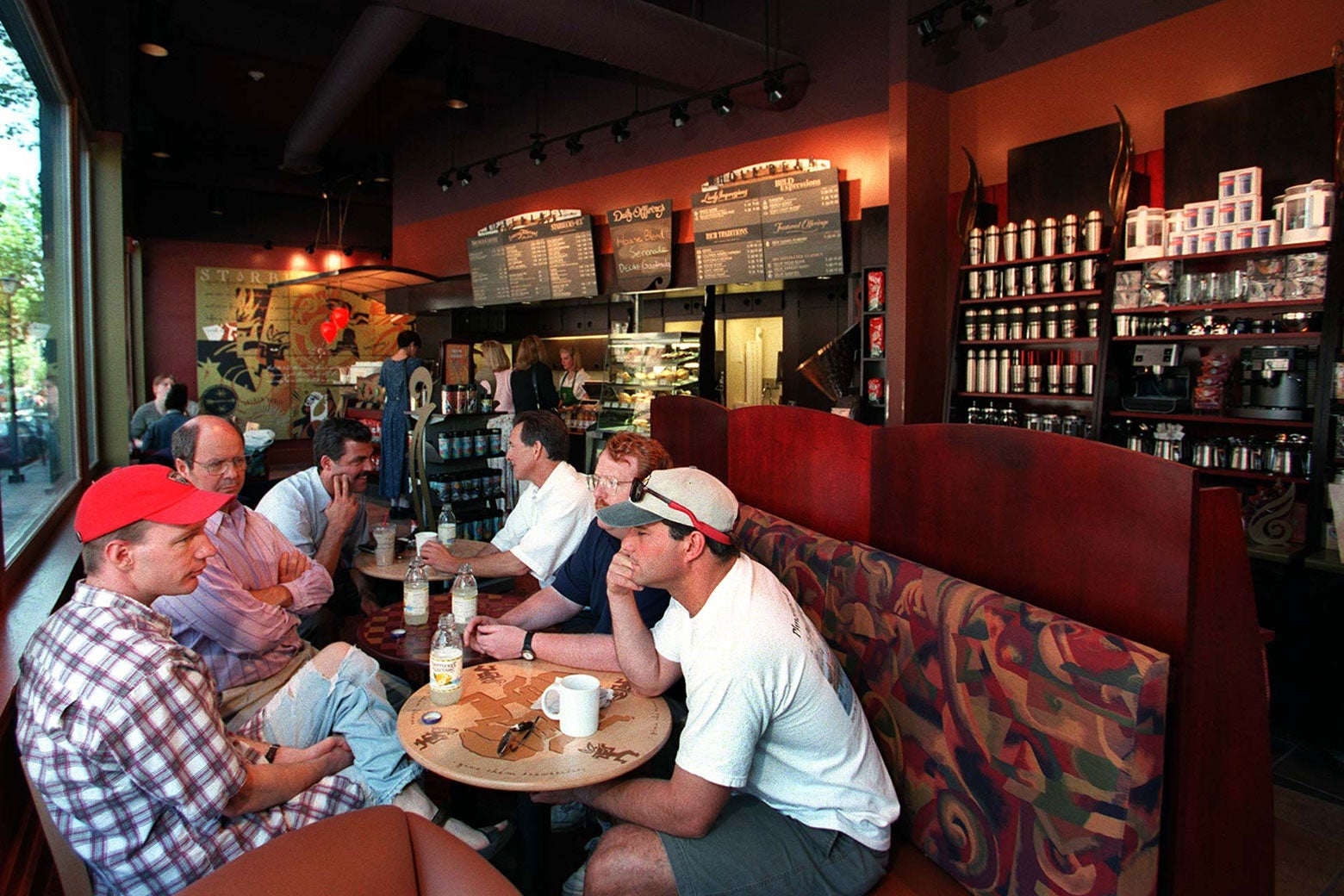
Under Schultz’s 24 years of tenure—from 1987 to 2000 and then again from 2008 to 2017—he led the company to become a force in American business and culture, growing its market cap to $78 billion and expanding from 17 stores when he purchased the brand in 1987 to more than 25,000 in 2017, the year he finally stepped down. (Now, there are more than 40,000.) Schultz piloted the café concept, introduced the loyalty program, and made Starbucks the biggest coffeehouse in China, thanks to an aggressive expansion into the market that historically preferred tea.
Then something changed.
For years, Starbucks was often spoken about in business classes as a standalone case study, a juggernaut in the retail business as a brand that surpassed all expectations, achieved global omnipresence, and became inseparable from the very idea of coffee. Now it’s being studied for other reasons. The company has found its once-in-a-generation success story turned upside down. Sales have been sluggish, falling for nearly two years straight before reverting to flat in the U.S. market at the end of October. Profits have fallen by double digits for four quarters straight, and the stock is down 6.4 percent so far in 2025.
No one’s having fun. Loyal customers have complained about long wait times and an increasingly uninviting atmosphere in stores. On the other end, the company is currently on its fourth CEO in three years. Brian Niccol was brought in last year, after revitalizing Chipotle and Taco Bell, to turn things around.
What happened? Since it began its expansion in the 1990s, Starbucks had stood out from its competitors for two key things: its unique menu, and its atmosphere. A small cup of black coffee at McDonald’s or Tim Horton’s was certainly cheaper than one at Starbucks, but the point of Starbucks wasn’t really picking up a small black coffee—it was the ability to doctor an espresso drink exactly to your liking, try custom confections on their so-called secret menu, and have an opportunity to sip that drink in a cozy atmosphere that, at least to some, felt personality-defining.

But as the company grew, marketing its locations as a tableau in which to “stay awhile” ultimately meant there was a finite number of people they could sell coffee to per day. As it became clear people were willing to pop in for a $9 handcrafted drink and leave, Starbucks turned away from the original vision, instead hoping to bump profits by enticing a larger number of customers who wanted their coffees to go. The store rolled out mobile ordering, pickup-only store formats with no seating, and an ever-growing rewards program that offered a disappearing carousel of coupons and freebies, all in an effort to expand the number of sales that it could theoretically make in a day.
Along the way, thanks to a pandemic and shifting consumer habits, America itself changed, and not in entirely happy ways. The dual blows meant grim results for Starbucks. Now the country’s former favorite daily stop and B-school case study is fighting to return to what it once was, in more ways than one. Stare into the soul of Starbucks, and you’ll see how much work there is to do.
Grace Kim has collected Starbucks coffee mugs for 10 or 15 years. The 57-year-old remembers when the brand from Seattle first reached her in California. “It was like the first time we had these espresso-based drinks,” she said. “We went there for ‘good coffee,’ right? Before, we would just have instant coffee or whatever, some kind of lower-end coffee, and we would go to Starbucks as a treat. It was so exciting.”
Visiting Starbucks was the first time Kim became aware of an “elevated coffee experience,” a place where you could sit for a while and sip on a cappuccino, which she said she started to get familiar with because of the brand. Kim’s experience was shared by millions of devoted fans. For many people, Starbucks was not just a coffee chain—it was a coveted destination, a way of life, even. But then things started to change.

Starbucks is largely credited with pioneering the world of mobile ordering and building an ecosystem of rewards that keeps the consumer loyal to the brand. “That definitely took off, and then the third place dwindled away during the pandemic,” said Ari Felhandler, a financial analyst who specializes in the food and beverage industry at the firm Morningstar.
Zarian Antonio Pouncy, 31, has worked at a Starbucks on the Las Vegas Strip for 11 years. He told me he first began noticing the shift toward mobile ordering in 2014 and 2015, and that it completely changed what was expected of baristas.
“We have our standards and routines, and things started to feel more robotic,” he said. “More times than not, we’d have to deal with a huge influx of customers coming in through the drive-thru and in through the door. There would be huge amounts of orders coming in, and people not picking them up.”
The locations quickly started to feel the pressure of the fast turnaround on drinks. “We started to feel like, ‘Dang, maybe we need three or four more people,’ and we weren’t getting a chance to work without feeling the pressure.”
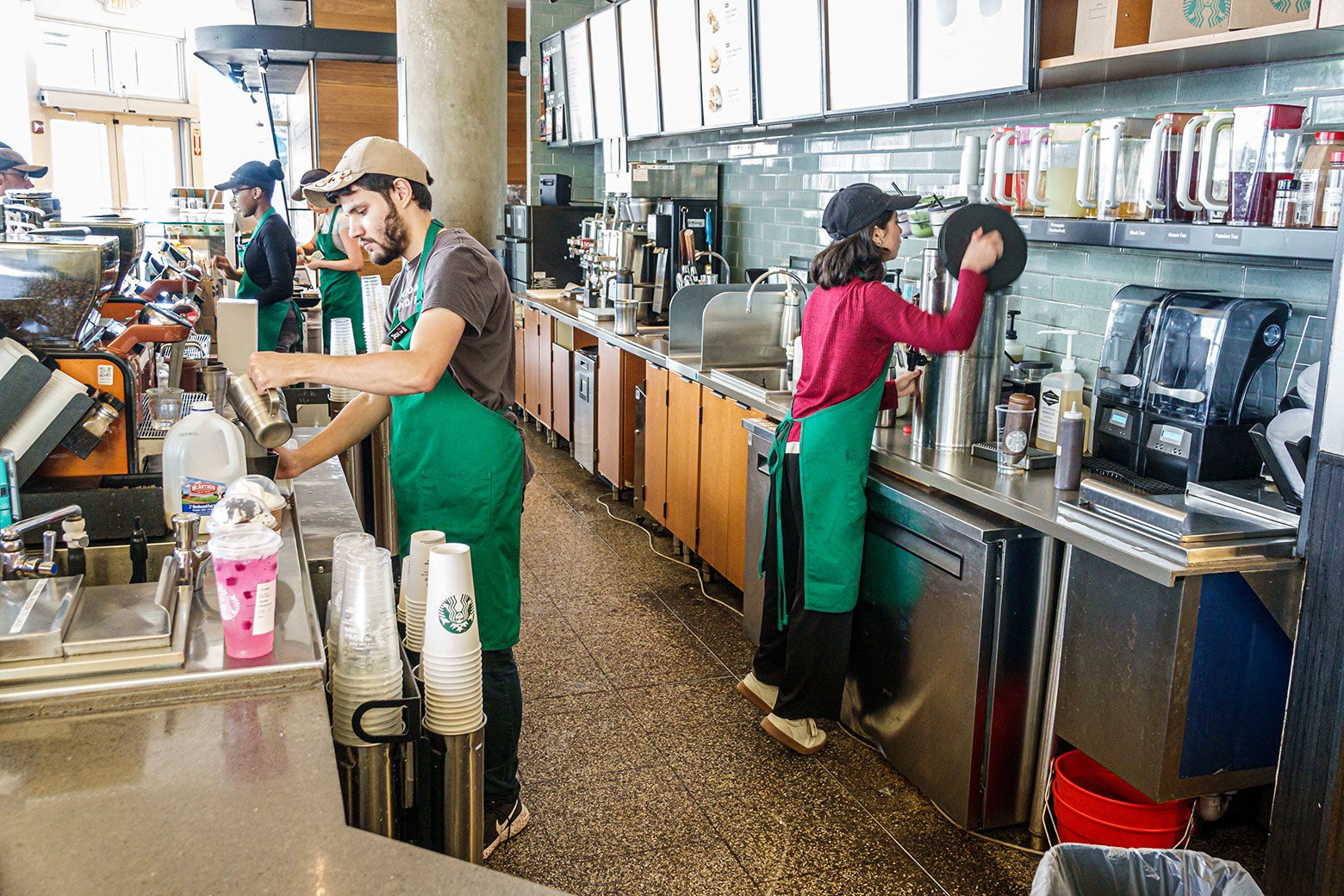
The expectation, Pouncy said, was to get three or four drinks out within a minute, often with adjustments like extra shots of espresso, flavored syrups, sauces, powders, and drizzles, which take more time: “It was like, drinks coming in through the mobile orders, coming in through the café, and drinks coming through the drive-thru. That’s three different channels for one to two people. And it’s not feasible—none of it has ever made any sense, even to this day.”
Adya, the Frappuccino drinker, said she remembered experiencing that switch in the brand identity when she walked into a store in Midtown Manhattan just before the COVID-19 lockdown. “The store itself was basically empty, even though there were tables and chairs, but there were rows and rows of mobile-order drinks just waiting on the counter,” she recalled. “That’s the first time I saw the shift. When I was in school, Starbucks was always packed, versus a few years later, and it was kind of desolate.”
Even as the pandemic abated, the trend only continued. “ Starbucks hasn’t been immune to the difficulties that have been faced by the restaurant industry as a whole,” Felhandler said. “Traffic has generally declined in the majority of months out of the last three years, and Starbucks has definitely fallen victim to that. They’ve struggled to reel consumers back into their stores.”
As I chronicled the company’s about-face, I began to see the plans underway to change that.
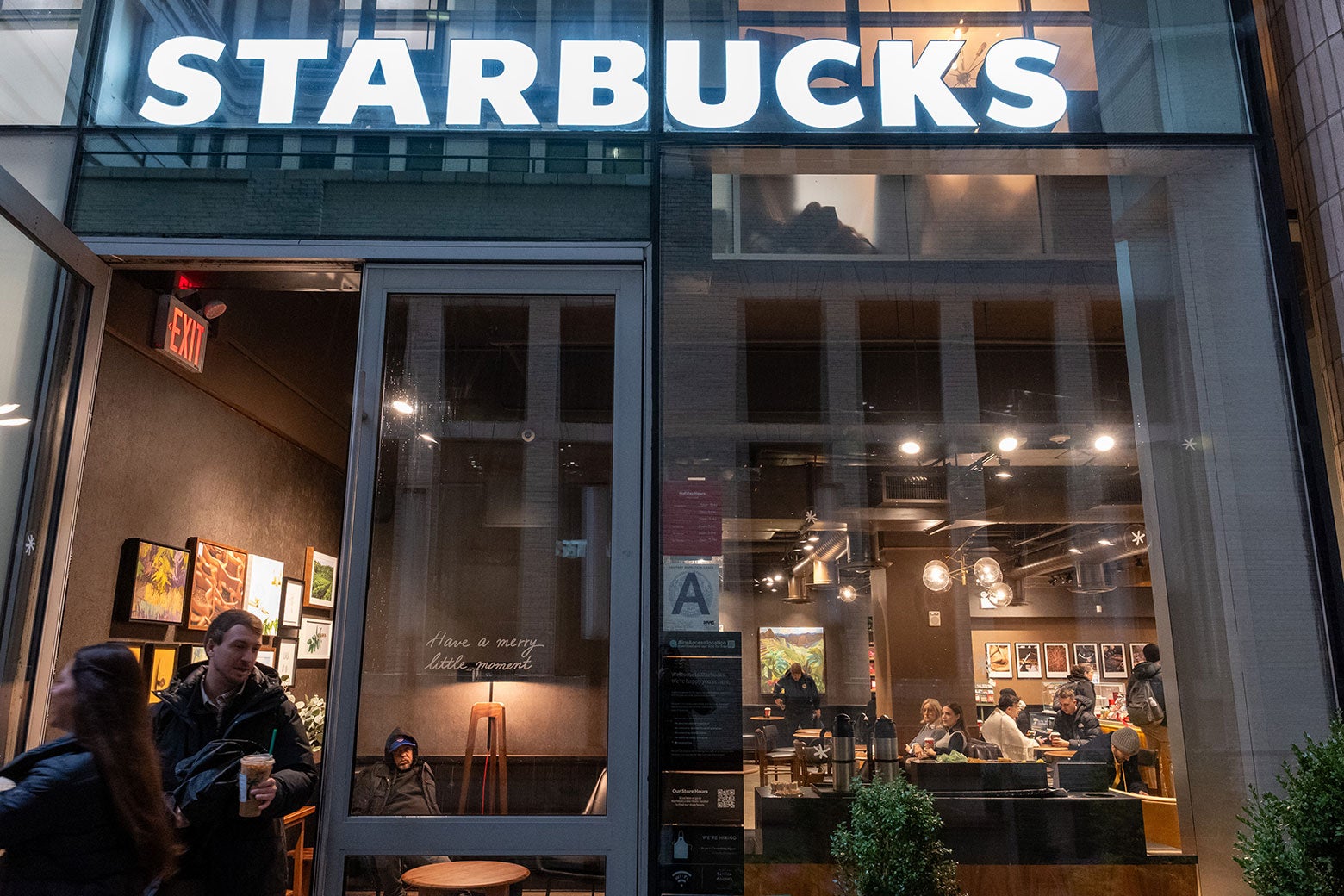
The Starbucks location in Manhattan’s Union Square is surprisingly tranquil these days. Though the café is tucked into the corner of two bustling New York City streets, the inside of the shop is peaceful. On a recent visit, tan leather benches cradled people who quietly worked on laptops or scrolled on their phones, while a group of people lingered in line, chatting in pairs. Even with the rush of midday customers, there were still plenty of plush seats, ottomans, and warm-wood high-tops available, all wrapped up in recessed lighting and festive New York City holiday-themed decor.
It was a far cry from what this place used to be. I remember that just a few years ago, picking up a coffee at the Union Square Starbucks was like going into the sewer tunnels underneath: a dark, dirty, spiritless experience where you rushed in the musty darkness to grab your overpriced coffee and speed out again. The seats were sparse, wooden, and often sticky. It was a place of passing by, a hallway to stop in, but rarely stay. In contrast to this bright, festooned, walnut-trimmed coffeehouse, the memory of the old location feels like a fever dream.
The pickup concept is now being sunsetted under Niccol, who called the stores “overly transactional and lacking the warmth and human connection that defines our brand” in a company call earlier this year. He announced that the company would be focusing on sprucing up its existing stores rather than building new locations.
The Union Square location is part of the brand’s “uplift” program, a massive restructuring effort under Niccol as part of his larger “Back to Starbucks” strategy that aims to bring people back into the stores and reestablish Starbucks as the third place du jour. Select stores in Southern California and New York City are being given a targeted investment of $150,000 each to replace thousands of the seats to have an emphasis on greater texture and warmth.
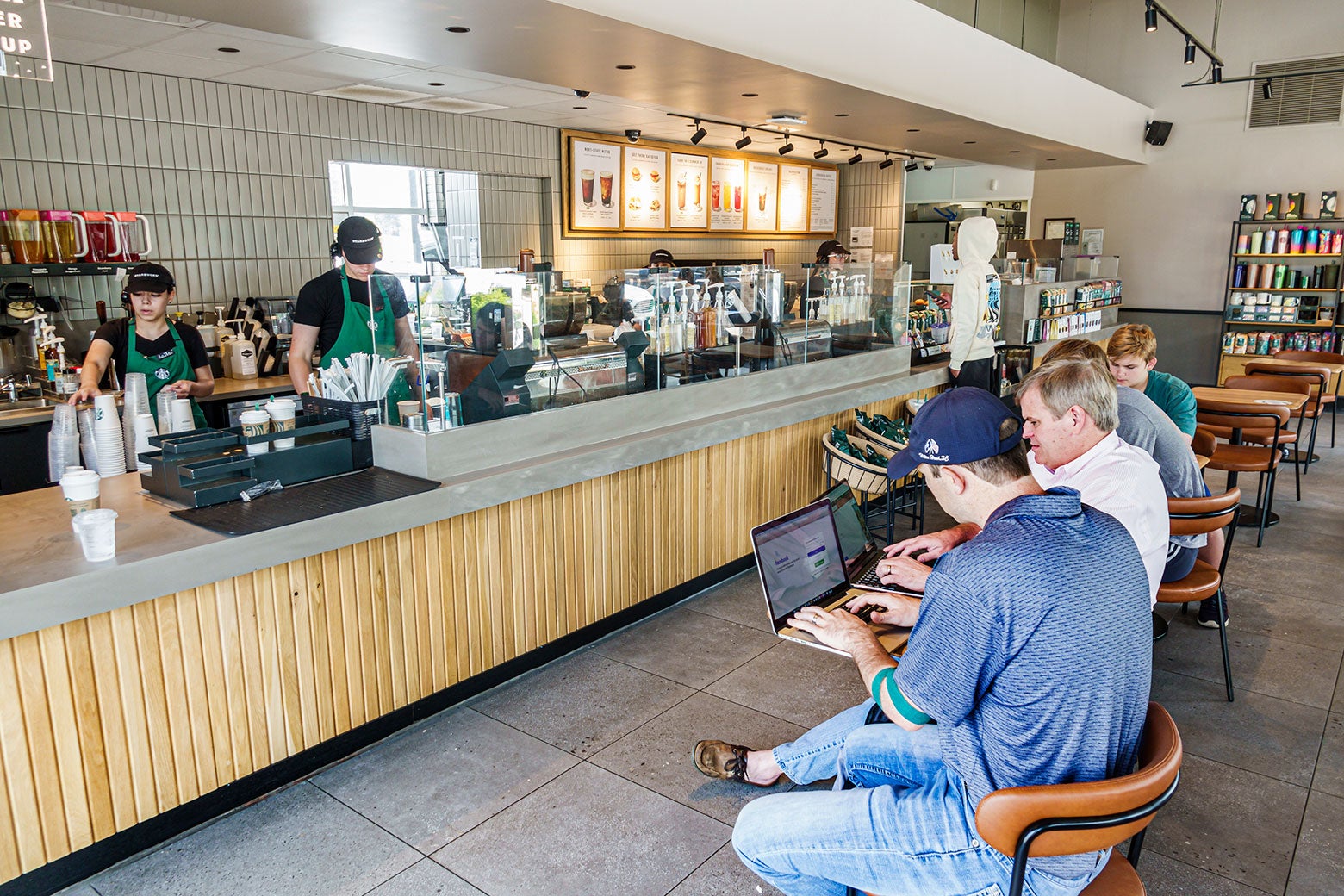
The new look of Starbucks interiors indeed feels trendy and warm, with plenty of plush fabric or leather cushions to sit on, green walls and potted plants, and midcentury design elements in the chairs and counters that give the overwhelming feeling of being inside your Pinterest-addict-friend’s apartment. Even though mobile ordering and drive-thrus will still remain a part of Starbucks’ business, it’s clear that the company is attempting to steer customers back toward an in-person experience. In a statement, Starbucks, which seemed reluctant to engage for this article, told me that while some pickup-only locations have closed down completely, “others will convert to traditional coffeehouses, ensuring customers continue to enjoy both convenience and connection.”
“Every coffeehouse we operate should be warm and welcoming and provide a place for customers to connect and gather,” Niccol said during a conference call discussing the retailer’s third-quarter financial results. “They should have a great seat for any occasion, and they should provide customers access to a high-quality Mobile Order and Pay experience and a drive-thru where possible.”
The “uplifts” aren’t the only thing that Niccol is attempting to achieve. Starbucks has also gone back to ceramic mugs for in-store diners and a “Green Apron Initiative” that involves the baristas writing cute little notes on your to-go cups, like “Enjoy” or “ok wow cool.” There’s a focus on connecting with the customer once more, and for good reason. Amid a loneliness epidemic and the loss of many other third spaces, consumer habits have been changing again. Young people—especially Gen Z consumers—are flocking to pay for experiences rather than products. In a post-lockdown world, the pickup-only format is less attractive to people who don’t just want their money to be spent on a fleeting moment.
“Consumers, I’d say, are drawn to quality experiences,” said Felhandler, the analyst. “They associate it to the value of a brand, or the value of a product, and that can justify the price that they charge.”
As a longtime customer, Kim said that while she still enjoys the novelty of picking up a piece of merchandise on her travels, the experience of going to Starbucks just doesn’t strike a chord with her anymore. She would want more in-person experiences and a shift toward partnerships with local businesses for their food and drink, in the way that newer chains are proudly announcing where they’re sourcing everything. She also doesn’t get the customized drinks anymore.
“I wouldn’t say that I seek it out for the elevated coffee experience that initially started me with Starbucks,” she said. “When you go now, their menu is like a Cheesecake Factory of coffees instead of just having artisan pasta or something.” But she knows it’s a sign of the times. “The young kids go for the other stuff, the crappy sugary drinks. For us older people, we just do it out of convenience,” she said.
Cold drinks now make up 75 percent of Starbucks’ total sales, up from 35 percent in 2013, according to Felhandler. Notable among those sales is the Frappuccino, which first launched as a Starbucks product in 1995. “Generally, Starbucks’ ability to generate excitement through innovating on drinks, whether it’s catering to trends or their limited-time offerings and really market that to core consumers, has been their bright spot,” Felhandler said. “They’ve really been able to hone that through add-ons and really craft their own beverage, which isn’t necessarily something you could do at a McDonald’s.”
Yet Kim’s wishes still echo the desires of many coffee drinkers today, the customers part of so-called third-wave coffee. While the first wave was hallmarked by canned brands like Folgers and Maxwell House, with instant coffee and diner coffee brews hitting American homes, the second wave, starting in the 1960s, highlighted the origin of the bean, taking the coffee consumption experience to a new level of sophistication. Customers weren’t just having a cup of coffee—they now knew if they were having a Colombian or Ethiopian roast, as well as the notes of the coffee they could buy. With that specialization also came espresso beverages—the flat whites, cappuccinos, and Americanos that now make up the baseline menu for most coffee shops. It still wasn’t common then: When Starbucks first arrived in New York in 1993, the New York Times defined what a latte was for its readers. But the third wave of coffee is fixated on grades of coffee beans and handcrafted specialty beverages—the add-ons that make spending the extra money really worth it, something that you cannot make for yourself at home. Can Starbucks be a destination for that again?
With the combination of a shaky job market, the rising cost of living, and the Trump administration’s tariffs, consumers have become more discerning about where they’re spending their money, Felhandler said. Limited-time offerings, expanded loyalty memberships, and increased advertising to new audiences are crucial to making the cost seem worth it to a person whose budget is already stretched quite thin. Felhandler said that bubble-tea and soda concepts are performing well in the beverage sector right now, showing how the priority isn’t really a cheap, daily purchase that gets baked into your routine, but a special treat that allows for you to get a specific, fun experience. There’s a value in locality, too; showing now, for example, not just what country the beans are from, but also what farm they’re grown on and what grade they are.
And now, Starbucks is staring down the barrel of an increasingly crowded market. Longtime competitors like Dunkin’ Donuts, Peet’s Coffee, and Panera Bread all started their rewards programs after Starbucks launched its app, creating more camps for customers to pledge their loyalty to. There are also the rising coffee newcomers, like San Francisco’s Blue Bottle Coffee and private equity–backed Blank Street Coffee, which also offer a large menu of specialty espresso drinks at their locations alongside their own membership programs and sleek storefronts. Other major corporations including Capital One have also made a bid to become the preferred third place; they boast arching windows at their locations, which combine your local bank with a coffee shop, and have half-off deals on all food and drink for cardholders. (The company has even partnered with California’s Verve Coffee Roasters for its espresso beans.)
“There has been a lot of competition in beverages,” Felhandler said. “Even players like Chick-fil-A are looking to invest further in their beverage-related items because they’re higher-margin, and that’s attractive, something you add onto an order. So overall there has been a decent amount of competition.”
There’s also less interest in something that splits the middle of a sit-down restaurant and fast-food joint, as places like Panera struggle to hold onto their own sales growth. Starbucks is facing a similar situation: No one wants to spend a lot of time there, but grab-and-go coffee is usually cheaper elsewhere, so the appeal of this twilight zone is shaky.
That’s not to say that Starbucks is dead. The outcry over the Bearista coffee cups proved just as much. But there’s more exposure to options, and in that, many previous consumers have been lured away by different chains. But Pouncy, the Las Vegas barista, told me that Starbucks isn’t really listening to the people that matter: The customers and the workers.
“This past year, back in June, they had a big, giant managers summit where managers were flown across the country here to Las Vegas, and they spent a full week here—not in their stores, trying to, you know, uplift them, make them feel great, make them feel seen and heard,” he said. “And then a couple months later down the line, all of a sudden now they’re closing stores. Some managers that I’ve known for 10-plus years are no longer with the company anymore. They were either let go or kind of pushed themselves out before getting affected,” part of the struggle to become more like the Starbucks of yore.
There’s also the fact that these new third-wave coffeehouses don’t have the pall of controversy surrounding them. In a time when people on social media champion the idea of aligning your spending to your values, many also find the idea of supporting a behemoth like Starbucks kind of cringe.
Last year, Starbucks was implicated in the intense social media push for more divestment from Israel. (Starbucks issued a statement saying the company, and the former CEO, does not “provide financial support to the Israeli government and/or Israeli Army in any way.”) The company has also been facing widespread accusations of labor mistreatment. In early December, New York City’s Department of Consumer and Worker Protection ordered Starbucks to pay $39 million to more than 15,000 workers for giving its baristas unpredictable schedules, routinely reducing their working time, and denying them the opportunity to pick up extra shifts. It’s the largest worker-protection settlement ever seen in the city. Unionized Starbucks baristas are also currently on the longest strike in the company’s history, receiving support from politicians like Bernie Sanders and Zohran Mamdani, both of whom joined workers on the picket line in Brooklyn in December and joined the calls to boycott Starbucks.
“If I see someone with a Starbucks cup, sure, I’ll make jokes, like, ‘Girl, the boycott,’ ” Adya said. “But really, the brand just doesn’t resonate with me anymore.”
Pouncy is currently on a strike over unfair labor practices at his store. He said that leadership should take into account this changing consumer tide, especially when so many people are showing their support for Starbucks Workers United. The union is currently striking for a contract, and Pouncy said that it’s one of the things that’s keeping him going and motivating him to stay in this job. He said that with leadership changing so many times over the years, he has dealt with constantly shifting business directions, which he feels often miss the mark, based on what he sees and hears from store regulars on a daily basis.
“They’re trying to be trendsetters without realizing: Guess what? Boomers, you’re not the trend,” he said. “That’s one of the things that’s been kind of hard to sit back and stand with. That’s why, at least in my store, a lot of us did organize our store to unionize. I couldn’t continue to sit back and kind of take the nonsense.”
Some customers agree that the strike is the thing keeping them from returning to the leather-clad clutches of the coffeehouse. “If you see me with a Starbucks cup, know that something is wrong,” Adya said.
The company does not quite seem ready to let all that slide.
When I reached out to Starbucks for comment, a spokesperson asked if there “would be any tension” in my article. They would not clarify what they meant by “tension,” and also declined to answer any questions outside of written responses.
“We made investments in staffing and hours to put more partners on the floor at the right times, we reassessed and extended hours of operations for about half our U.S. company-operated portfolio, and we expanded rosters and maintained healthy hours per partner,” the spokesperson wrote in an email. “As a result, we had strong partner engagement, record low hourly partner turnover, and improved customer experience scores in Q4 FY25.”
Sales are turning around for the company. It’s no longer bleeding money as of the last quarter. Starbucks is also leaning into the washing machine of social media trends hitting our feeds: protein lattes and Dubai Chocolate Matcha are gracing the winter 2026 menu, and it brought out Hello Kitty–collab cups that are currently reselling at 40 to 50 percent markups. But as much as it might be nice if the once beloved chain could find third-place nirvana once again—that Union Square location is looking nice—it’s clear the recipe that won America will require more than one magic ingredient.