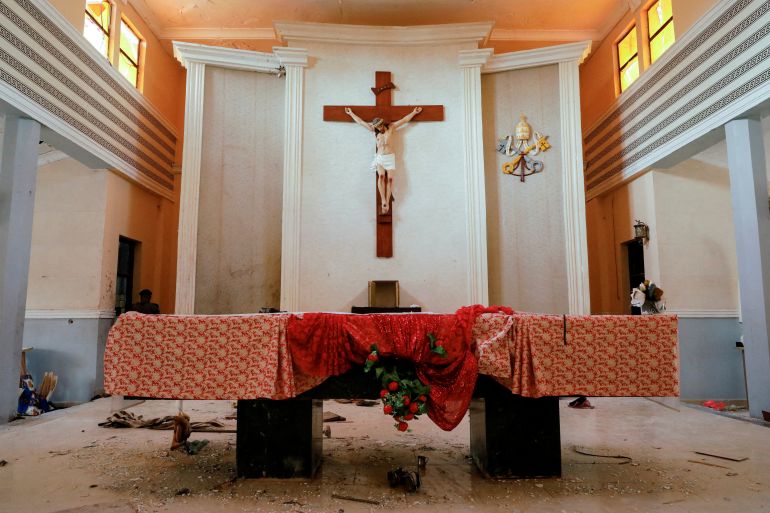
Indian Christians claim that they've been Christians since around 4 AD. Some even say that it was around the dawn of the 4th Century AD - which means in the early 300s AD. However, today they have British, Greek, and sometimes Aramaic names. Other ancient Christian communities from Armenia, Georgia, Ethiopia, and Palestine have names like "Ashrawi", "Abebe", "Basmadjian", and "Dzugashvili." None of these Christian surnames are Greek, Aramaic, or English like they do in Kerala, India.
The Kerala-based Christians worship at churches with British architecture and European esthetics - even the Jesus looks very white.
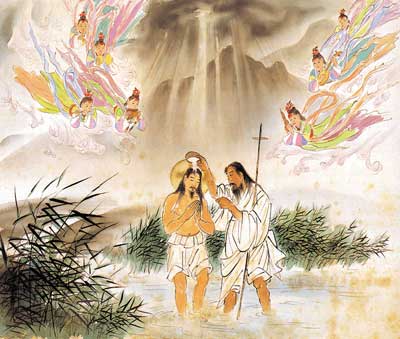
The Koreans have first practiced Christianity in 1784, but these Christians, who were Catholic, faced severe persecution. Around 1880, Christianity was reintroduced by Protestant missionaries from Manchuria, and it really picked up during their Japanese occupation. In their depictions of Biblical events, they clearly show Jesus as someone having Eastern Asian features. It's remarkable to me that most people would find this peculiar and not historically accurate, but then again, neither is the European's depiction of Jesus having European features.
In Italy, they were depicting brown-skinned Jesus since 530 AD.

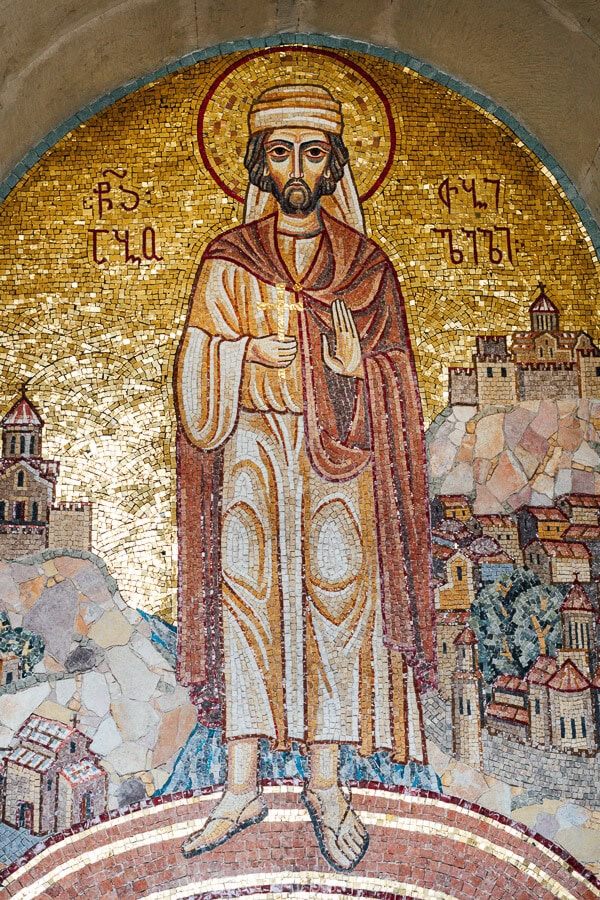
Is it racist that Kerala Christians and Ugandan Christians depict a white-skinned Jesus, but their religious counterparts in Italy, Georgia, Palestine, and Armenia all depict Jesus as being much more darker and a lot less European? If so, what can we do about it? What about the Korean's depiction of Jesus?
Nigeria had Christian missionaries from Portugal as early as the 15th century, and European colonization used Christianity for control. You can connect the dots.
Kerala, the same thing. Britain had colonized India. Christians took advantage and formed an organization called the Church Missionary Society in India and built buildings, churches, and infrastructure that continues to bear its name (CMS). That's why it looks British and Jesus is white.
But India due to its location received Christian missionaries far earlier. So people who claim 4th century are not wrong.
So yes, white Jesus is racist since we know where Jesus, if he existed, would have come from and what people looked like.
As for what we can do about it, outsiders can't reason with faith and willingly colonized minds. They can inform people, encourage people to explore their own history, and people have to come to their own conclusions. If you are a member, you can agitate from the inside.
Note "swarthy" is a loaded term and is racist when used disparagingly. You're not doing it here but should generally be avoided.
Thanks a lot for your reply.
I didn't realize that this term was loaded. I've removed it.
Georgian iconography doesn't depict Jesus dark-skinned. https://www.shutterstock.com/image-photo/vardzia-georgia-march-23-2014-jesus-186795503
The image you provided isn't Jesus, but St. Abo of Tbilisi, the patron saint of our city and an Arab convert to Christianity who was beheaded by Caliphate for apostasy, venerated as martyr in Georgia. Georgian Jesuses usually look very... Georgian. Light-skinned, Dark-eyed and dark-haired. Neither the nordic Jesus of the Western and Northern Europeans, nor the Ethiopian darker Jesus
This is a very good observation. I believe that Christianity came to India during times of Saint Thomas. However, British colonisation eventually took place and brought in european representations of Jesus. These pictures have been carried on for decades and in the end, became normalised.
Il me semble qu'entre le XVe et XVIIe siècle la culture du royaume Kongo représente des saints et Jésus noir. Par contre en Ethiopie ils sont représenté blanc. Je n'ai pas de réponse pour cette différence de choix dans les représentations.
As a christian from kerala. I wasnt expecting to see this but you might have to look into spanish and portugese arrivals mate. They burned our books, changed our tradition so we lost a lot of our customs. We had syranic origins. Like our native language is malayalam but all the holy masses in olden days were in another language called suriyani. We cant be racist cuz a lot of people from kerala are dark skinned mate. There are lot of colourists but that came from the british.