(mainichi.jp)
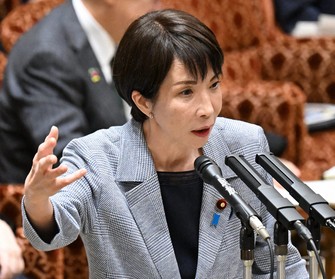
TOKYO -- The administration of Prime Minister Sanae Takaichi, in coordination with the ruling coalition, is considering stricter immigration controls as part of its foreign resident policy. A comprehensive plan is set to be finalized in January 2026, with specific visa categories and measures now coming into focus.
At the end of 2015, Japan had about 2.23 million foreign residents. By the end of June this year, that number had increased to approximately 3.95 million, a 1.7-fold increase over 10 years. Foreign residents now make up about 3% of the population. It is estimated that the rate will exceed 10%, which is the average for OECD countries, in 2070.
However, then Justice Minister Keisuke Suzuki suggested this past August that if current trends continue, the 10% mark could be reached sooner. The ruling Liberal Democratic Party and Nippon Ishin (Japan Innovation Party) mentioned "quantitative management" in their coalition agreement, which would adjust the number of foreign residents accepted if their proportion reached a level deemed too high.
In this context, stricter residency management is being considered. The primary target is the "permanent resident" status, the most common visa category. As of June, there were about 930,000 permanent residents, accounting for some 23% of foreign residents.
Permanent residents have indefinite residency and no work restrictions. To qualify, individuals meet certain requirements, including having good conduct, possessing sufficient assets or skills to maintain an independent livelihood, and generally having lived in Japan for 10 years or more. The government is considering effectively raising the income criteria for independent livelihood and introducing a new requirement for "a certain level of Japanese language proficiency."
Additionally, there are plans to effectively raise the required residency period to apply for Japanese citizenship from "five years or more" to "10 years or more" -- the same length generally required to seek permanent residency -- after critics pointed out it took far less time to get the former than the latter.
The second most common visa category, "Engineer/Specialist in Humanities/International Services," is also under review. This visa allows employment in fields requiring technical skills or knowledge, such as interpreting or design, and about 450,000 people (11% of foreign residents) held this status as of June. However, there are cases where individuals with this status work in unskilled jobs, so it is planned to strengthen measures to prevent unauthorized employment, including actions on the employer side.
Furthermore, a system is being developed to deny visa renewals or changes if the applicant has a certain amount of unpaid premiums for the National Health Insurance (NHI), which is mandatory for stays over three months.
The Takaichi administration's review of foreign resident policies includes using the Digital Agency's network to allow the Immigration Services Agency to access information on unpaid premiums held by municipalities. Currently, foreign residents' payment information cannot be gathered, so system upgrades are planned to start in 2026, with nationwide implementation by June 2027. Unpaid national pension contributions may also be considered in residency evaluations.
According to a Ministry of Health, Labor and Welfare survey of about 150 municipalities, the NHI payment rate among foreigners is 63%, below the overall rate of 93% for all residents, including Japanese.
Measures to address unpaid medical bills are also being advanced. Currently, information is shared with the Immigration Services Agency if unpaid bills exceed 200,000 yen (approx. $1,300), but preparations are underway to lower this threshold to 10,000 yen (about $65). This information will be used in screening re-entry for short-term visitors such as tourists.
(Japanese original by Kenji Tatsumi, Tokyo City News Department, and Haruka Udagawa, Lifestyle, Science & Environment News Department)