(oepicus.com)
Systems Online
FOLLOW YOUR TONE.
SHAPE YOUR BLISS.
For those who believe sound deserves attention.
Oepicus Club
Exclusive Offers // Top Secret Information
The Apollon Series launches on

February 2026
Join Oepicus Club to get pre-launch updates, early access, and exclusive offers before pledges go live.
Built To Last (Realistically)
Lifetime Warranty — nothing lasts forever, just cover the shipping
Precision by Design
In-House SMT Manufacturing
Built in Epic Surroundings
Global Distribution Ready
Origins
Why Oepicus Exists
Oepicus began with a feeling, which is rarely a sensible way to start a company, but often the only way to start something worth doing.
Our name is built from Opus, a great work, and Epic, something larger than yourself. It reflects the kind of work we admire: stuff crafted with care, shaped by effort, and meant to endure—whether that's a piece of music, a timeless story, or a sunrise that briefly convinces you everything is fine.
We've spent years playing, building, breaking, and rebuilding gear, and along the way realised we weren't just chasing sound—we were chasing the satisfaction of shaping it properly. Instruments, we believe, should reward attention rather than shortcuts.
We started with pedals because they sit at a curious crossroads: immediate yet deep. But these are not straightforward guitar pedals. Oepicus instruments bring synthesis-level ideas—dynamic control, CV integration, expressive interaction—into the hands of guitarists, synth players, and modular explorers alike.
Built by designers and engineers with over 30 years of combined experience, every Oepicus instrument is produced using professional assembly and in-house SMT manufacturing to ensure consistency and reliability. Each unit behaves exactly as intended. Any chaos is entirely your own.
Oepicus exists to celebrate the beautiful act of making sound—
for those who see music not just as output, but as blissful work.
An opus.
Made epic.
The Apollon Series
How Apollo Got Involved
The idea for the Apollon Series arrived, as many questionable yet productive ideas do, during a holiday in Greece. No drugs were involved in its creation—though there may have been far too much coffee. Details remain unclear.
Surrounded by ancient stones, relentless sunlight, and the lingering sense that the gods never really left, we found ourselves thinking about Apollo—not the polite statue version, but the complicated one. God of music, light, order, prophecy, and the occasional divine overreaction. It became obvious that his many domains mapped rather neatly onto how modern musicians actually work: shifting between instruments, roles, and states of mind, often mid-song.
From that moment came the Radiant Instruments of Apollo—a family of pedals, each embodying one of his attributes. Not recreations or relics, but modern instruments designed to move fluidly between guitar, synth, and modular worlds. Mythic in spirit, practical in use, and very much alive.
We began with four pedals. Each stands on its own. Together, they form something greater—at which point we fully expect fireworks, shenanigans, and possibly mild celestial commentary.
Apollo, after all, was never known for subtlety.
The Technicalities
How the Instruments Actually Work
(Yes, They're Pedals. Yes, They're for Guitarists...and Others)
At first glance, Oepicus instruments look like pedals—because they are. They live on pedalboards, they respond beautifully to pickups, and they're designed to be played with guitars at the center of the experience. If you're a guitar player, you're very much at home here.
Where things begin to differ is in how these pedals invite you to interact with them. They're built around expression first. Dynamics matter. Touch matters. Timing matters. Pick attack, volume control, and playing nuance all shape the response in ways that reward attention rather than flatten it.
Crucially, control doesn't stop at your hands—or even your guitar. CV inputs and outputs aren't decorative extras; they extend what guitar pedals can do, allowing these instruments to speak fluently with synths, modular systems, and other sound tools. This opens the door to collaboration and experimentation, bringing guitarists into the wider world of expressive electronic sound without asking them to leave their instrument behind.
Under the hood, professional assembly and in-house SMT manufacturing ensure consistency and reliability. Every pedal behaves exactly the same on paper. What happens in practice depends entirely on how you play—and how far you choose to explore.
Oepicus instruments aren't about presets, menus, or automation. They're about playing. About treating pedals not just as effects, but as instruments in their own right—made to be touched, explored, and occasionally surprised by.
They're guitar pedals.
They just don't believe the guitar should be the only voice in the room.
What's Behind All This?
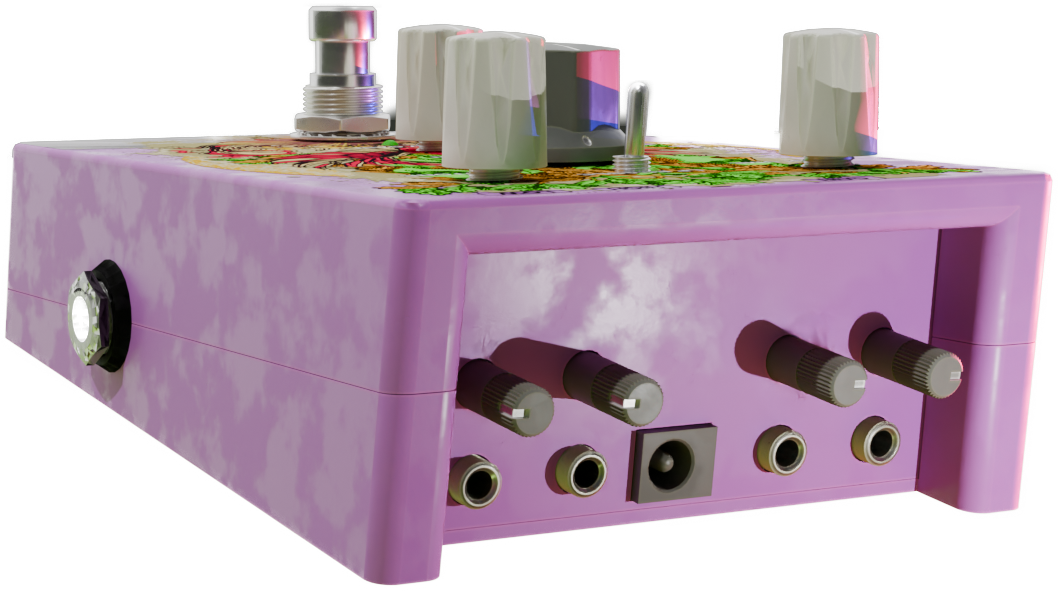
Yes, your eyes do not deceive you—those are CV inputs. While our instruments speak fluent Eurorack, you don't need a modular synth to explore their potential.
Some pedals generate control voltage, while others listen for it. This means you can patch one pedal into another, creating complex interactions without a single module in sight.
Or, for a touch of beautiful chaos, you can even patch a pedal into itself.
The Instruments
And now, a breakdown of what each instrument can do...
FAQ
Connect With Us
Have questions or just want to talk shop? Join our community channels to connect directly with the team and other musicians.
Subscribe to Newsletter
Get the latest signals from Oepicus, including product announcements, articles, and exclusive offers.