(hearthmusic.substack.com)
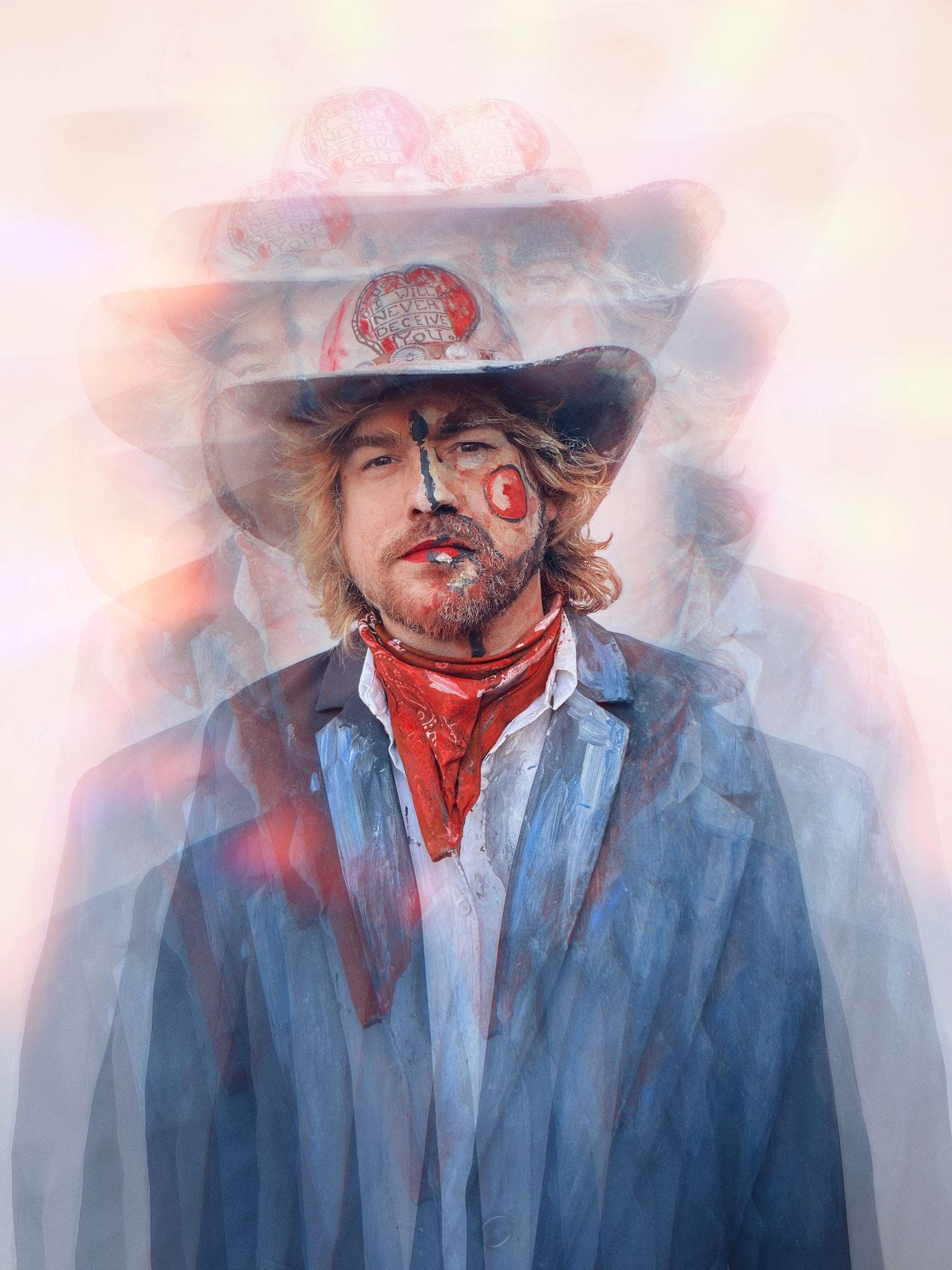
Just recently, visionary non-binary Americana singer Adeem the Artist posted that they were leaving the music industry. This has been coming for a while, as Adeem’s social media posts have become more and more frayed, slipping from funny, extreme bits that often got them into trouble with folks not in on the jokes, to more worrying ground that showed the pain they felt in the music business. Adeem’s been at the forefront of political songwriting in Americana, a genre that’s struggled mightily in recent years with improving inclusion and equity. They wrote a heart-rending, incredibly powerful song about the genocide in Palestine. They took on Jason Aldean’s racist quasi-lynching song with a brutal parody. At the best of times, the music industry has not been easy for minority artists, and I’ve seen how hard this has affected many of the folks I’ve worked with over the years as a publicist, but also as a journalist. And we’re seeing it now. Trans artists in America are posting about how hard it is to be the public face of all of America’s hate right now.
It’s not just LGBTQ+ artists that are feeling the brunt of our current political climate. STG Presents, a very large and powerful event production company in the Pacific Northwest, cancelled a full day festival of Latine and Mexican-American artists for THING festival outside Seattle citing that “community safety concerns have greatly reduced tickets sales.” That means an entire festival is gone, featuring some of the most cutting edge roots musicians, like Yahritza y su Esencia who hail from nearby Yakima, WA and put on a great NPR Tiny Desk show. The Seattle Times posited that concerns over ICE deportations may have played into the decision to cancel the one day of THING that was focused on Regional Mexican Music. Because it played into decisions to cancel other Latine festivals in the region. It’s mind boggling to think that festival organizers are concerned enough that ICE will assault and kidnap people at their festivals to the point that they are canceling events. And this is no small thing. We’re not necessarily talking about small, regional groups. Even the smallest Mexican-American bands in a region often bring a ton of money in at dances (one banda in Seattle was making so much money they had to split into two different bands!). And an artist like Yahritza is huge right now, bringing in millions and millions of streams and huge audiences. She’s running an empire, so we’re not talking about a small event.
THING festival cited visa difficulties as well and that’s long been a problem in the US. The incredible difficulty and expense in getting a visa to play in America has only gotten much much worse under the current administration. Artists are being pulled off flights and sent home, hassled at the border, or mainly are having their visas delayed so long that they miss their gigs and lose large amounts of their livelihood. A fiddle camp I was at this summer was shaken when one of the featured teachers was detained at the US Border and sent back abroad. Many festival that relied on Canadian talent are struggling to bring artists across the border now, as Canadians, naturally don’t want to be detained. Another artist I work with made international news when they were pulled over by a traffic cop in the Midwest and asked “loyalty questions” about which country they liked better. On a larger level, our country is deeply impoverished by not interacting with the rest of the world. Most other countries around the globe support artists financially at a governmental level and send their artists out to interact with other traditions to enrich their own cultures.
Here at home in the US, publications are being stifled and pressured not to cover breaking news tied to controversial topics. One of the key voices in Americana activism, Carsie Blanton, a Jewish-American artist that sells out mid-large size venues and gets lots of press coverage for her releases, was detained, kidnapped according to her, by Israeli forces recently as part of the Global Sumud Flotilla. Along with hundreds of others, she sailed to Gaza bringing humanitarian aid and attention and was detained and placed into a high security Israeli prison known for its brutality. Big news right? No major media publication covered this that I could see. I thought at least the Americana/Roots outlets would say something, but it was crickets. A week after being detained and a few days after her release, Rolling Stone covered it in depth via some excellent reporting from music journalist Jonathan Bernstein. It’s shocking to me that this can go unheard, and though I didn’t do any better as a journalist really, I’d like to think that more media outlets would have said something about what seems to be a very newsworthy event.
This isn’t an isolated incident. I’ve spoken recently with some Black artists about the seeming lack of interest from Americana media. In the wake of Black Lives Matter, there was a big push in Americana as an organization to create equity for Black artists in the genre. Many publications were writing about Black artists extensively. Not as much anymore. Jake Blount talked about this publicly for WBUR this month in this article. “It really feels like there was this rush for Black artists in 2020 and now everyone is just washing their hands of us.”
The point here isn’t to call out other journalists for not doing enough. I’m as much to blame as anyone else. The point is that we should all do more to amplify the voices of artists who are being left behind on the front lines of this exhausting culture war. Art and culture is incredibly important right now, not just because it builds communities of resistance and resilience. Art and satire is one of the most effective means of protest against this particular administration. Why else would Trump go after The Kennedy Center, or the Smithsonian, or even country singer Zach Bryan? Republicans have been targeting art for decades since they know the power it holds over those in power. I was on the front lines of this way back when John McCain was boosting the “Top 100 Most Wasteful NEA Projects”. Art speaks truth to power, and in some ways, it’s the best offense we currently have.
I’ve had a busy year this year. Lots of writing projects, some of which I’ll link below, and some publicity work too. But I’ll do better to kickstart this Substack since I really believe that there’s a whole world of roots and trad music we’re barely hearing about in the US. And that there’s a lot of powerful voices who can relate from their own perspectives how this administration is damaging people and artists.
Look, it is a very confusing world right now. Even if you read all the mainstream news, it’s still hard to figure out how everything fits together. Here’s a few quick tips of other Substacks to follow who are way better at explaining it all.
Ted Gioia - The Honest Broker
Not only is Ted an incredibly brilliant music journalist, one of the very best, he’s also a pretty prescient futurist. I’ve found his Substack very much worth the money as a way of understanding where we’re going and how we got here.
Garbage Day
One of the best Substacks for understanding the terminally online world that’s fueling everything. Not all doom and gloom, his recent deep dive on the KaiCenat world of livestreaming is super fascinating.
Nathan Evans Fox
A true Southern rabble rouser, I got to spend some time with Nathan last weekend at Madrona Fest and just really came away loving his concept of “Y’allidarity".
Y’allidarity Social Club
Speaking of his work, Nathan’s podcast with Lizzie No is a really interesting take on Spotify, streaming, and artistic labor. It honestly made me feel a lot better about a lot of thing.
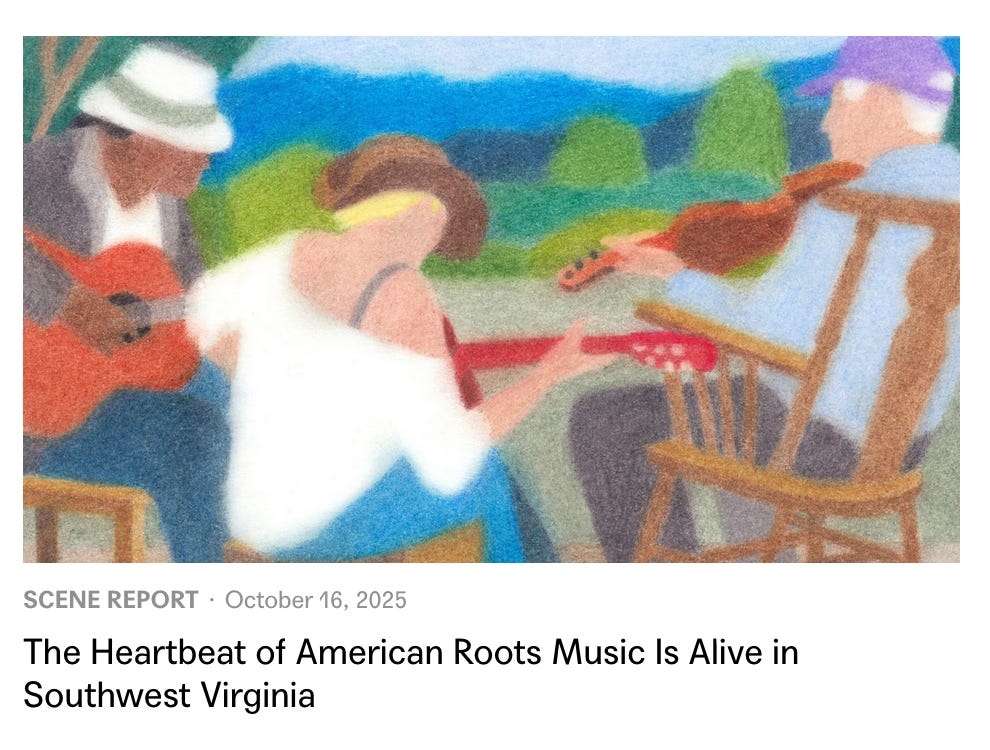
I just wrote this big feature for Bandcamp Daily on Roots Music in Southwest Virginia. I got to interview bluegrass star Danny Paisley, Applachian musicians Dori Freeman and The Wildmans, and Dylan who runs the Floyd Country Store in Floyd, VA. Really interesting piece I thought on how music travels through families along the Blue Ridge, from the Big Bang of Country Music in Bristol to the present day in Galax.
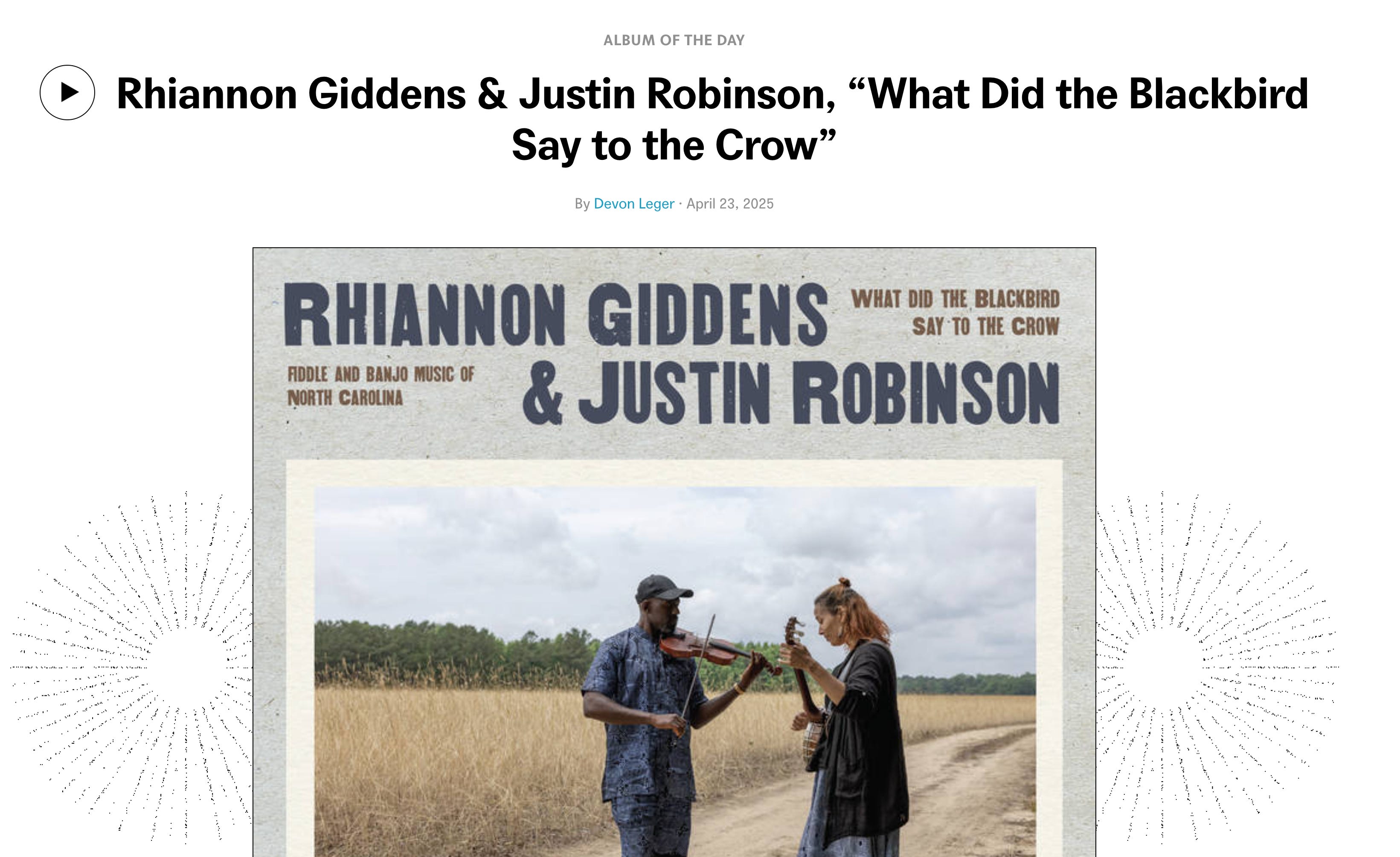
I also wrote an Album of the Day for Bandcamp on Rhiannon Giddens & Justin Robinson’s fascinating album of Black stringband music. I was really taken with how they recorded and performed within old spaces, reclaiming land for Black voices.
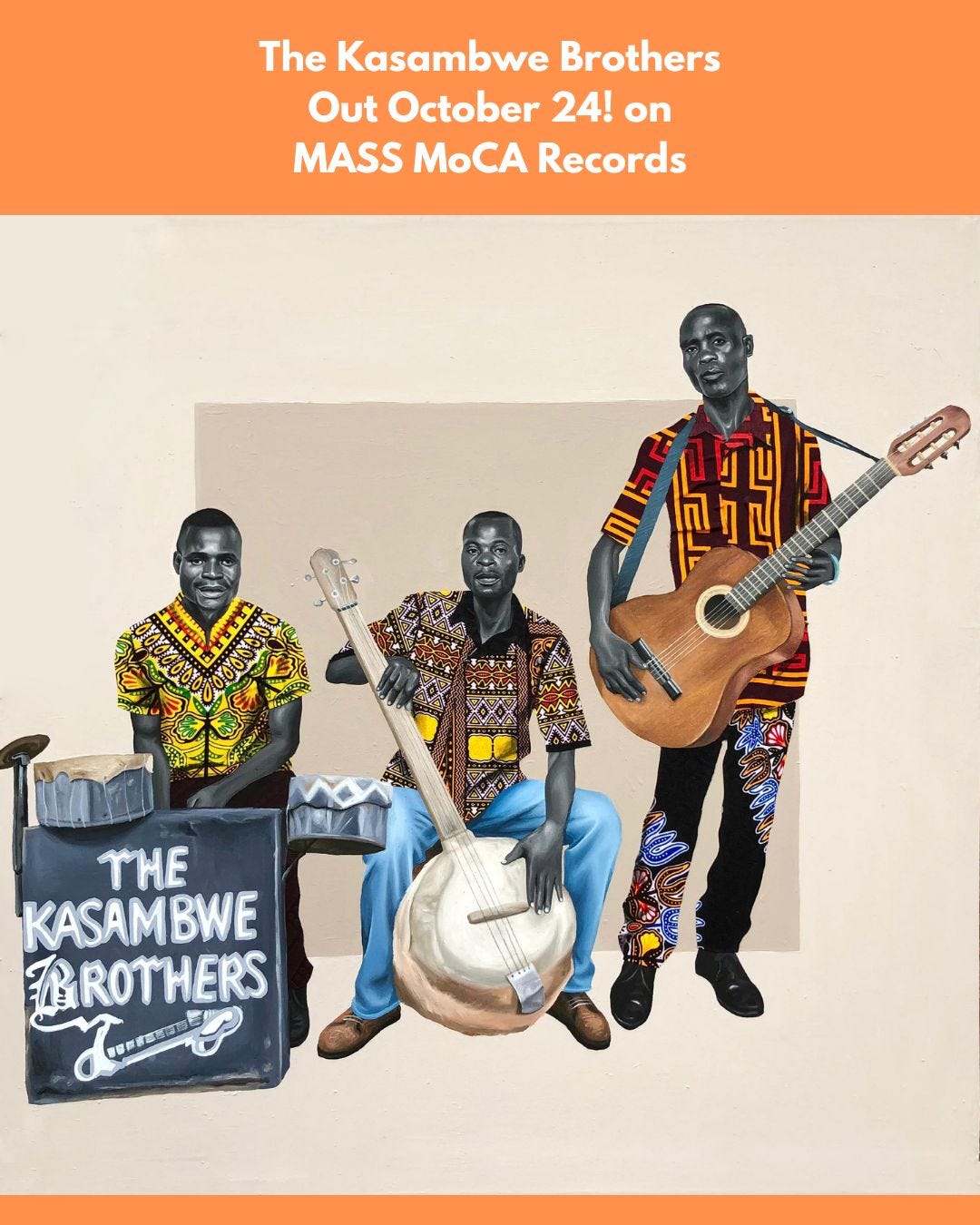
I’m dipping my toes back into PR for the debut album on a new record label, MASS MoCA Records. The Kasambwe Brothers are a band of street musicians from Malawi who came out to MASS MoCA in residence to perform and record with my old friend Harlan Steinberger of Hen House Studios (Sunny War, Cinder Well, Willie Nelson). The album is so uplifting and beautiful, though it does tackle some hard topics. And I loved the babatone, a huge banjo-like bass instrument.
I ended up LOVING Sam Amidon’s Field Guide to New England Music that he pulled out of the Smithsonian Folkways catalogue. I thought I was nerdy about New England folk, but he wins!
I’ve been writing a lot of Songlines Magazine in the UK. It’s all in print, so you can’t find it online unfortunately. But I did get a chance to write about the glorious new album from Mauritanian diva Noura Mint Seymali.
I’ve been trying to track waila music. Also known as “chicken scratch”, this is the accordion and saxophone instrumental dance music of the Tohono O’odham Native Americans from Arizona. Turns out there’s a super awesome new wave of the music that has a much more driving style and takes places as round dances in big parking lots at night. It’s hypnotic! Check out the band Papago Warrior: