(landmark.earth)
The Trump administration has struck what critics see as a novel deal with Utah for shared stewardship of national forests in the state, raising concerns among environmentalists that it is setting the stage for mass logging.
The deal, announced last week, updates a previous agreement established between the federal and state governments. It lays out a cooperative framework for the management of federal forests when it comes to approvals for everything from logging to cattle grazing.
While similar agreements have been struck before — including by Utah itself, and more recently by Idaho and Montana — critics told Landmark that Utah’s deal goes much further, and appears to establish a framework to potentially make good on a longstanding priority for Republicans in the West.
Namely, they said, the deal appears geared to enable a rush of logging and extraction on public lands.
“The purpose of these good neighbor agreements was to focus on fire-safe communities,” Laura Welp, the Southern Utah Director at the Western Watersheds Project, told Landmark. “This new agreement really expands the role of the state in managing the forests and doing landscape-level restoration projects, which is basically clear-cutting.”
It is no secret that increasing American logging and timber production is a goal of the Trump administration.
This latest agreement comes nearly a year after President Donald Trump signed an executive order demanding expanded timber production on federal lands, one of several ways that the administration has targeted the public domain. Administration officials have also proposed rolling back the so-called “Roadless Rule” that protects around 58 million acres of untouched federal land, and the Department of Justice has asserted that the president can abolish national monuments meant to protect historic and archaeological sites.
Republicans have also tried, and failed, to pass laws to sell off millions of acres of public lands in the west. Interior Secretary Doug Burgum has referred to the lands as America’s “balance sheet,” and supporters of a sell-off have said the land can be used to build housing and to expand oil and gas drilling in the United States.
The state of Utah also launched an unsuccessful lawsuit to gain control of the federal lands within its borders.
U.S. Forest Service Chief Tom Schultz, a former timber industry lobbyist with the Idaho Forest Group, said when announcing the deal that Utah and the Forest Service have a “shared vision” to expand timber production and “landscape-scale restoration” to reduce wildfires.
Agreements between states and the Forest Service are explicitly authorized in U.S. law, and two prior agreements were reached between the agency and Utah during both the first Trump administration and then the Biden administration.
The statute authorizing the cooperative agreements does include restrictions, stating that the federal government is the only body authorized to identify trees for logging and must oversee sales.
While earlier efforts to sell off public lands have failed after receiving fierce opposition from sportsmen, environmentalists, hikers and even the courts, critics told Landmark the new deal between Utah and the Forest Service looks like a back door to get the same results.
With the federal government still holding deed to the land, they argue that the deal’s provisions emphasizing timber production, livestock grazing and water projects show the state is likely eager to quickly issue approvals for those projects relying on legal shortcuts to do so.
Those shortcuts include categorical exclusions to essentially bypass most meaningful public comment normally required by the National Environmental Policy Act (NEPA), the nation’s keystone environmental review law.
Categorical exclusions are typically meant to be used to quickly approve projects with little or no environmental impacts, and critics of the deal said approving massive timber projects does not fit that bill.
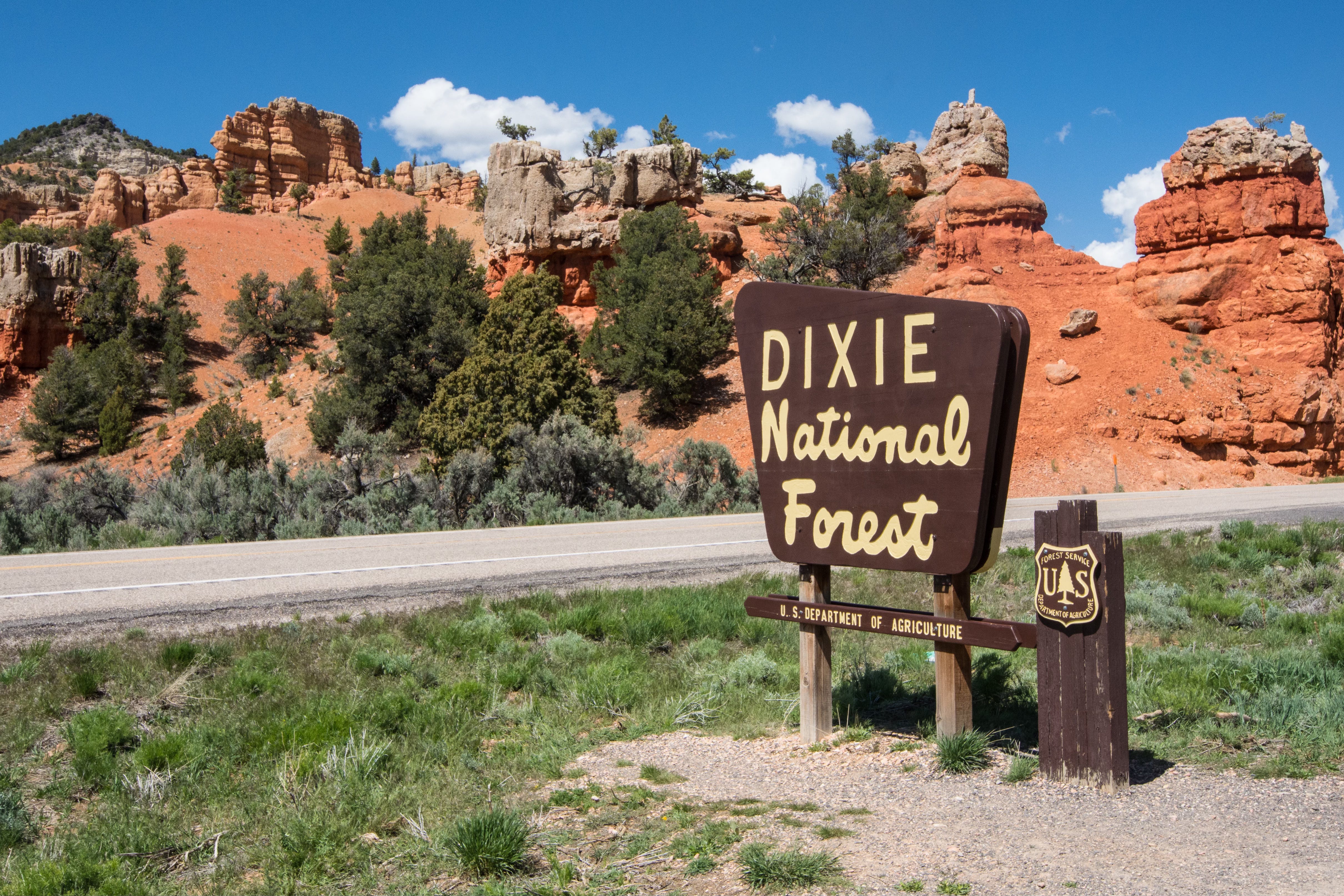
Steve Bloch, the legal director for the Southern Utah Wilderness Alliance, told Landmark that the latest document’s emphasis on recreation and timber sales is especially worrisome, noting that the timber industry has long eyed the Dixie National Forest in southern Utah for logging in particular.
This agreement “is just another facet of that long-running effort fo the state to call the shots on federal public lands,” Bloch — who said he is still reviewing the agreement to determine whether legal action is warranted, or whether it is best to challenge individual approvals that stem from it instead — said.