(sfstandard.com)
The yawning divide between haves and have-nots in San Francisco usually traces the borders of neighborhoods. But amid the widespread PG&E blackout that plunged one-third of the city’s streets and 130,000 residents into darkness Saturday, the gap was not just between neighborhoods but between neighbors.
For every stretch of darkness overtaking a city block, there were one or two houses abeam with light. Some pockets of the city saw power restored hours — or days — before others. Some residents and businesses were able to keep their lights on thanks to Tesla Powerwalls or generators.
Wealth alone didn’t make the difference. The mansions in the Presidio and Sea Cliff were in darkness for part of the weekend too. This point was driven home by billionaire Tom Steyer, who shared a video on X of his darkened Sea Cliff mansion with the words, “Almost 24 hours of no electricity in San Francisco. This is why monopolies don’t work.”
Some of the disparities appeared due to PG&E’s prioritizations: While much of the Richmond remained without power Sunday evening, the company touted on social media that it had helped “secure temporary generation” that allowed the 7 p.m. performance of “The Nutcracker” at the War Memorial Opera House to go on.
Meanwhile, a few blocks away, residents at the NEMA high-rise complex in SoMa were dealing with a 60-hour outage that cut elevator service and left hallways and stairwells difficult to navigate in the dark. Resident Jillian Kozyra said she was “extremely angry” at PG&E and the city’s slow response despite the “high rents we pay to live in a ‘luxury’ high-rise.”
Kozyra said she couldn’t even flush her toilet over the weekend, with water largely unavailable to the building. The building’s power came back on Tuesday morning.
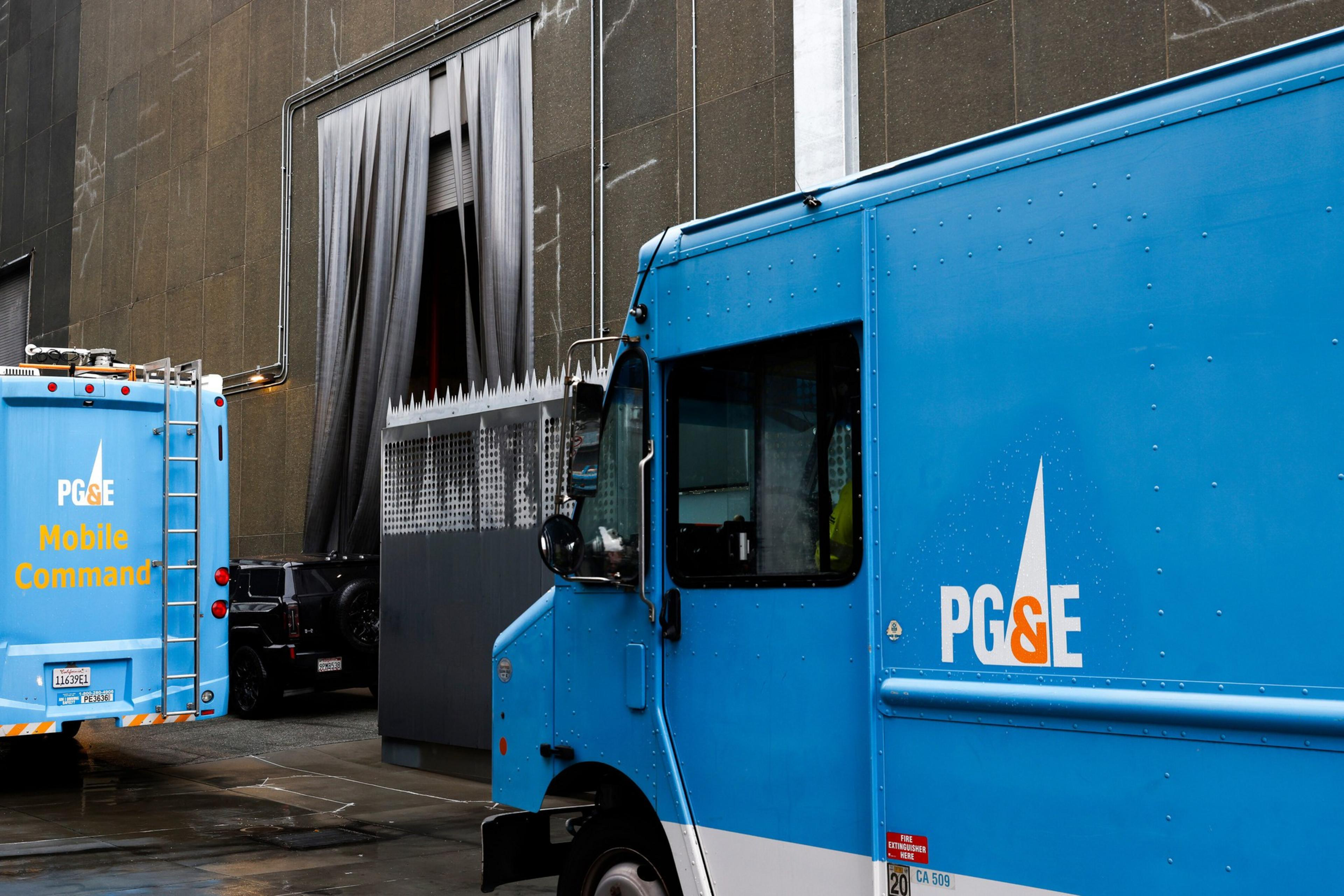
Their own power
Many who retained power in their homes took advantage of both money and preparedness, which allowed them to disengage from PG&E altogether. Having solar panels alone didn’t help people keep the lights on, unless they also had a backup power storage source. Former McClatchy News CEO Craig Forman, who lives on the west side, was one of the lucky ones – his lights stayed on thanks to a Tesla Powerwall, a rechargeable home battery system that costs $20,000 to $30,000 depending on the model.
According to electrical permit data from Data SF, 523 San Francisco residences received Powerwall permits between 2017 and 2025. The majority of permits went to homeowners in affluent neighborhoods like Noe Valley, West of Twin Peaks, and the Marina. It has become common for real estate brokers to highlight Tesla Powerwalls in luxury listings. In 2025, at least 10 properties touted Powerwalls as selling points, including a $6.5 million (opens in new tab) four-bed, four-bath, home in Dolores Heights.
Leah Culver, an angel investor and Airbnb programmer who is married to famed SF street artist Fnnch, said her home had power while her neighbors were plunged into darkness, thanks to a Span electrical panel and Tesla Powerwall setup.
“I would feel more guilty having full power on a dark street, except that I have a fridge full of breast milk for my baby,” Culver tweeted (opens in new tab).
But many fridges stocked for the holidays had to be dumped. Myron Lee, born and raised in San Francisco, said he had never experienced a blackout this long, with his Outer Richmond home still in the outage zone Monday afternoon. Perishable items in his fridge, meant for Christmas dinner, had to be discarded, an estimated loss of “a few hundred dollars.”
“Seriously, I’ve traveled extensively in developing countries recently, with heavy thunderstorms, and I didn’t experience any blackouts,” Lee said.
Block by block
One SF Standard reader emailed to say that while his block of McAllister Street in the Tenderloin remained without power Sunday, he’d heard that PG&E crews were “restoring power to the symphony building,” so he walked over to Davies Symphony Hall on Van Ness and “saw how lit that street was. Angled my camera down McAllister Street, zoomed in on my block, and it’s pitch black.”
That his Tenderloin neighbors had to throw out spoiled food while the party continued at the symphony only added “insult to injury,” he said.
On Saturday, SF Symphony’s matinee performance of “Home Alone” lost power midway through. The symphony canceled that performance and a 7:30 p.m. “Holiday Brass” concert. Power was restored later that night, and performances resumed Sunday. Those affected by the outage were offered refunds, gift certificates, or the chance to exchange their tickets.
The dancers in San Francisco Ballet’s “The Nutcracker” were warming up onstage for the 2 p.m. Saturday matinee when the lights went out in the theater at the heart of Civic Center. The show was delayed by an hour as staff rushed to find generators and other backup plans to light the stage. The orchestra played an impromptu concert of Christmas carols to keep the audience entertained during the delay.
“The audience was very patient,” said dancer Anatalia St. Clair. “Instead of frustration, there was just this sense of collective understanding.”
The matinee went forward with reduced lighting, but the 7 p.m. show was canceled. Sunday’s two performances went on thanks to generator power, though it remained dark backstage. Dancers did their makeup using flashlights, and dressers donned headlamps to get them into costume.
“We were sitting in the dressing rooms in the complete darkness, and it’s pouring rain,” said dancer Leili Rackow. “I think they were like, ‘No matter what, we’re going to put this show on.’”
Among the performers listed in the program (opens in new tab) for Sunday’s matinee was Taya Lurie, the oldest child of Mayor Daniel Lurie. The teenager was cast in the starring role of Clara. Lurie’s office declined to comment on whether he was in attendance for the show.
PG&E’s tweet about “temporary generation” for the 7 p.m. show prompted a wave of criticism from residents across the city who were still waiting for the company to restore their power.
A holiday with no celebration
While the Sugar Plum Fairy pirouetted, many of the city’s Chinese residents were disappointed to cancel their plans to celebrate Dongzhi (冬至), the winter solstice and one of the community’s most important holidays.
The blackout ruined the holiday for Rei Li, 72, a resident of the Richmond who intended to celebrate at home with a large meal and bowls of tangyuan — sweet rice balls that symbolize unity. Instead, the power outage forced him out of his home and into an indoor basketball court at the Richmond Recreation Center that PG&E had set up for residents to get warm and charge their phones.
Li said some of his family members decided to escape the blackout and head to Los Angeles.
“Of course it feels terrible,” Li said in Cantonese. “We couldn’t even eat anything hot. It’s a real shame.”