(torontolife.com)
People have been using computers to disrupt the status quo since the dawn of computers themselves. Back in the early 1960s, an MIT student hacked the punch-card computers at the library, programming them to give out extra screen time for free. Now that practically everything is connected to the internet, a tech-savvy person can wield enormous power. Some use it nefariously: data leaks at social media companies have exposed millions of people to fraud, and ransomware attacks have shut down hospitals, school boards and libraries. In 2016, Russian hackers stole and released tens of thousands of emails in an attempt to sway the outcome of the American presidential election.
But others, called hacktivists, argue that hacking can be a potent way to fight systemic oppression and injustice. They’ve committed unsanctioned, sometimes criminal cyber activities to draw attention to social issues, stepping in where they believe that conventional methods have failed. The decentralized hacktivist collective known as Anonymous has been wreaking havoc in the name of vigilante justice for more than 20 years. Its members have hacked governments and political parties in Tunisia, Uganda, Australia, Poland, the US and beyond to protest censorship, homophobic legislation and corruption. Just this year, Anonymous hackers leaked passenger lists from the Trump administration’s deportation flights to El Salvador, which people have since used to track down family members who went missing after being detained by ICE.
Aubrey Cottle helped get Anonymous off the ground when he was just 19, pulling off a career’s worth of mega-hacks from his parents’ homes in Toronto and later from his home computer in Oshawa. But, in 2021, Anonymous ran afoul of the US Republican Party by hacking the Texas GOP in an operation Cottle has been accused of orchestrating. Earlier this year, he was arrested and charged with identity fraud and computer mischief. Now, as he fights the charges, Cottle faces possible extradition to the US and up to five years in prison. Below, he shares his story—how 4chan went from a message board for precocious teens to an incubator for alt-right extremists; his role in founding Anonymous; and why, despite his impending trial, he doesn’t regret launching the hacktivism movement.
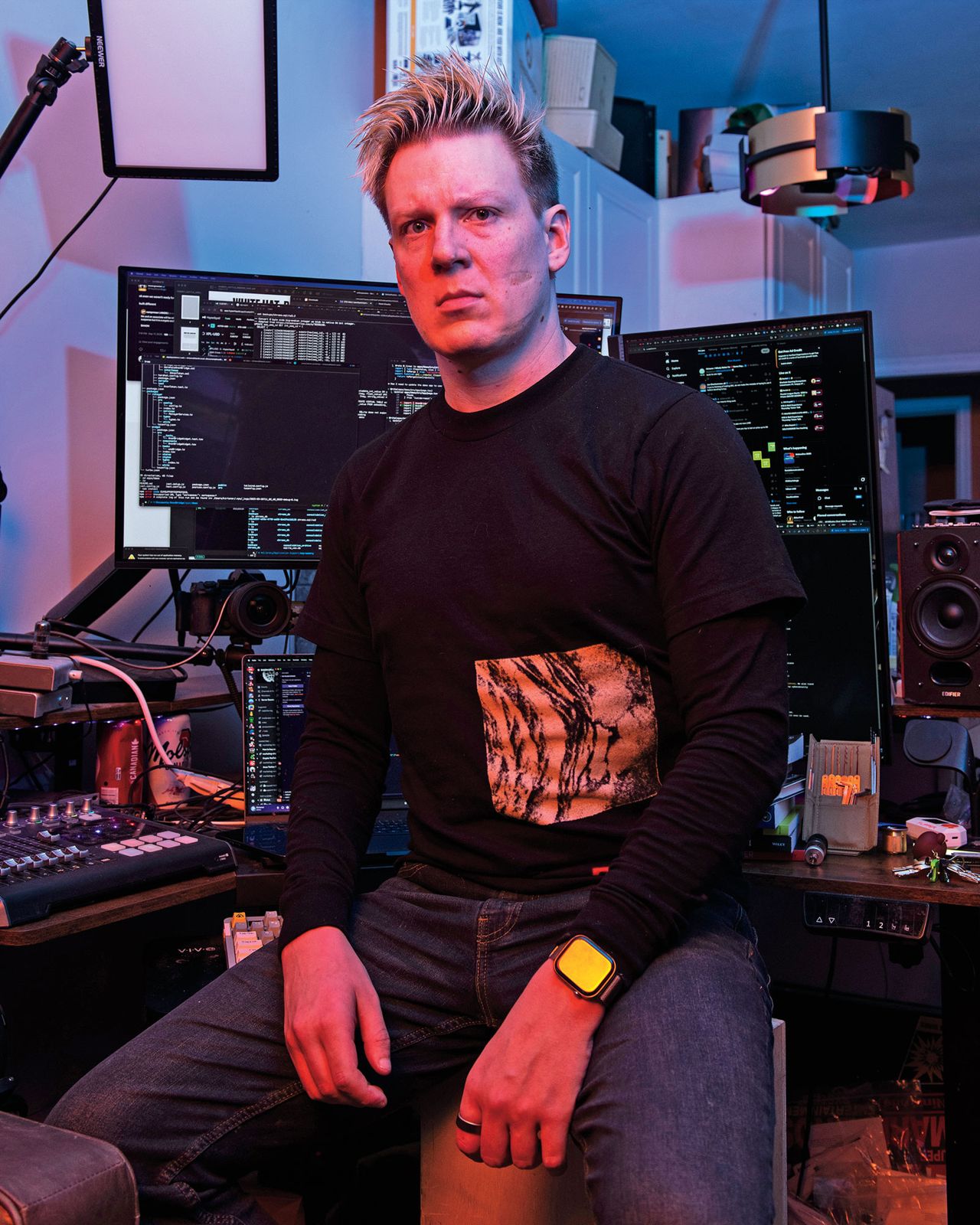
I started using computers around the same time I learned to tie my shoes. My dad worked for an internet service provider, and when I was seven, he set me up with a modem and my very own Commodore 64. It was every ’90s kid’s dream. He was also a fan of early computer games, which he would pirate off the internet. It was all pretty new then, but people were already buying physical copies of video games, cracking their digital copyright protections and then distributing them for free in chat rooms. At that point, those sites were just a black background with white text and links to download.
Related: He was a teenage hacker who spent his millions on cars, clothes and watches—until the FBI caught on
We lived near Bathurst and Eglinton, and our dial-up internet was painfully slow—you had to hope no one picked up the phone while you were trying to download something. Luckily, my dad’s office was in the Toronto Star building at 1 Yonge Street, which had huge bandwidth for that era. Sometimes he’d take me to work with him. I’d bring a stack of floppy disks and spend all day downloading pirated games. One of the first games I remember getting was Doom. It took ages to trickle in on the 1994 broadband, all 2.39 megabytes of it. Nowadays, you could run it on a device with the processing power of a digital pregnancy test.
In those days, if you wanted a machine to do something, you had to input commands manually. You basically had to know how to code in order to use a computer. In elementary school, I started borrowing books of code from the library. I’d spend hours meticulously copying commands into the computer so I could play tic-tac-toe or make the machine tell a knock-knock joke. But being a kindergarten coder didn’t get me very far socially. I got bullied most of my way through school and had a chronic hair-pulling disorder. I was scrawny, deathly pale and bald: a pretty easy target. I started wearing a Harley-Davidson jacket to try to look tough, which probably hurt more than it helped. By the time I was in Grade 7, I’d been harassed by other kids for years and had reached my limit: I lashed out at some of my tormentors and threatened to kill them. After that, I got sent away to a live-in mental health facility. For the next few years, I was in and out of treatment.
Related: The curious life of Elon Musk’s Canadian grandfather
It was at one of these centres that I got into capital-H hacking. The older brother of another patient was part of a piracy group. By then, Sega had released the Dreamcast home gaming console, with proprietary disks that could hold a whole gigabyte of game data—almost a thousand times as much storage as a floppy. The pirates had found a way to bypass the copyright software so the games could be shared online, but they were struggling to access enough bandwidth to distribute them. They recruited me to hack into broadband networks at various universities in order to piggyback off their faster internet. The pirates had a way to compromise the university computers and install a bot. Then, any user could type a command into a chat with that machine to make the bot send them games. At 14, I was happy enough to do the group’s dirty work, but my coding skills went way beyond what they were asking of me. I could have designed a bot to take over the whole computer system. Before long, I got bored of the repetitive task and told the pirates to do their own grunt work, but I officially had the hacking bug.
Some teenagers will break into abandoned houses or write graffiti on train cars. My brand of thrills was trawling people’s hard drives. Most home computer set-ups were so insecure back then that I could access all of their data with some pretty simple commands. It was like going through someone’s drawers, seeing what kind of stuff they had lying around and snagging anything—games, digital software licences—that piqued my interest.
Usually, I was just looking around and being a troublesome teen. Sometimes, though, I made my presence known. One day, I found Stanford University’s entire printer network, digitally out in the open and essentially unprotected. I was bored and 16, so for kicks, I hacked into the network and made every printer on campus spew out 500 pages of an incredibly explicit meme I’d found online. I’d just watched American Psycho, so I also made all the LCD screens say “Feed me a stray cat.” For good measure, I also disabled all the printers’ physical controls to make it more difficult to shut them down. I even emailed the university, bragging and pointing out the flaw in their system that a teenager had been able to exploit.
By 2003, I had found a community of digital mischief makers online to join me in my cyber pranks. I was an early user of 4chan, which had just been created. It didn’t have any of the baggage it has today; it was just an anonymous message board where people posted memes, usually with an edgy, ironic undertone. I even started my own site called 420chan, which was a space for a bunch of us from 4chan to talk about weed, professional wrestling and hacking. There, my friends and I engaged in increasingly elaborate internet pranks. We got into feuds with other online communities, organizing raids on their websites and generally being little demons. We also started a cybercrimes division, where we developed new hacks. We put together guides on how to use tools like the Low Orbit Ion Cannon, a bit of code that could shut down whole servers by spamming them with access requests. Often, we’d let 4chan take the heat for attacks that were coming from our smaller group on 420chan.
We were trolls, and we delighted in being provocative. In our unregulated corner of the internet, making fun of things was a universal right that needed to be protected, and the freedom to be politically incorrect was a point of pride and a key part of our humour. We were all in a competition to see who could take things the least seriously. There were layers upon layers of inside jokes, and no topic was off-limits: race, religion and sexuality were all on the table. A lot of us were left-leaning, most of us were anarchists and we were all anti-fascist. We made fun of racists and homophobes by parodying them, but our humour probably seemed offensive if you didn’t get the irony. A nice side effect was that it kept our community tight. If you couldn’t take our jokes, you probably weren’t cut out for the hacks we were organizing off the public message boards.
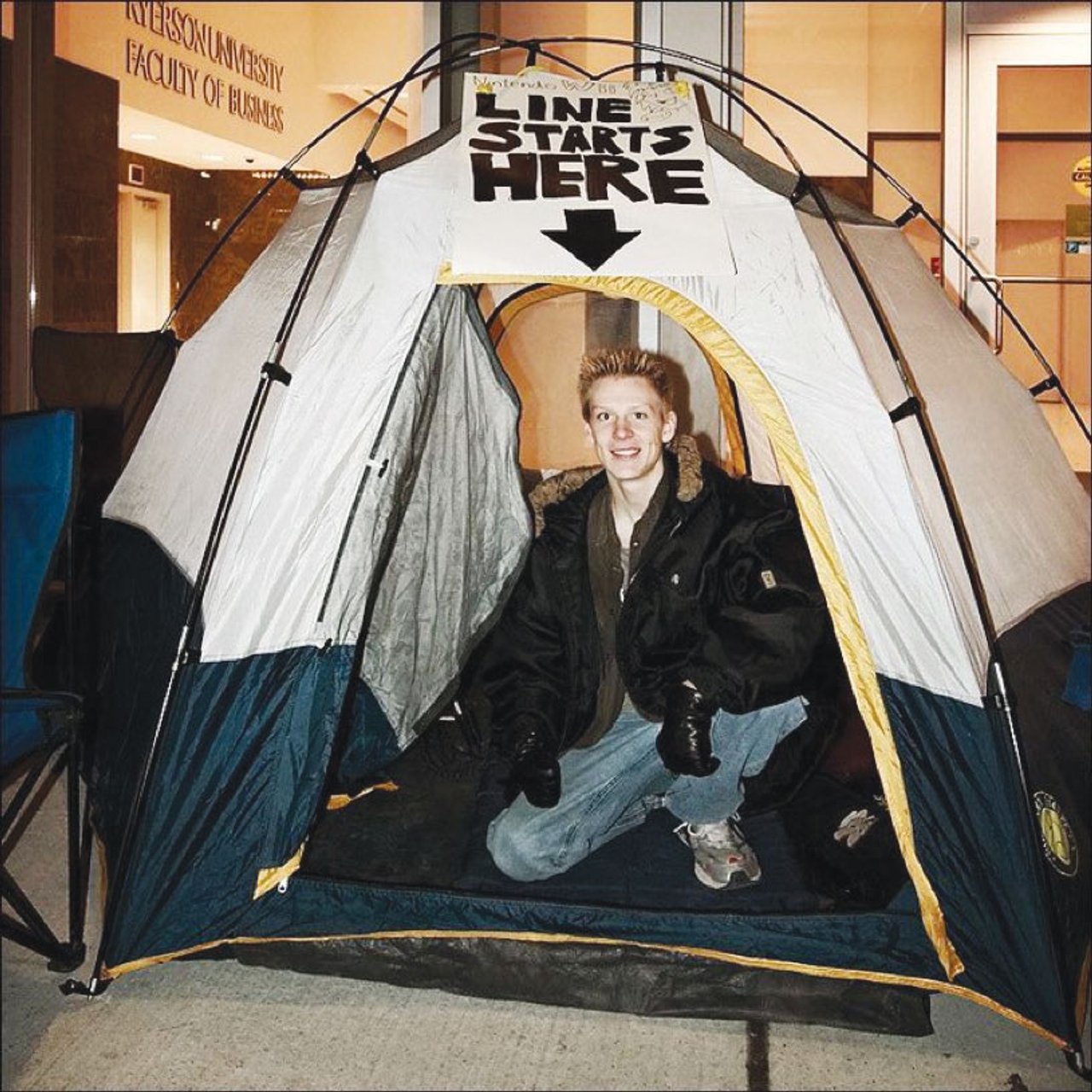
It was on 420chan that a group of us began calling ourselves Anonymous. All the posts on the message boards were anonymous, and we started joking that they were all from the same source, a single collective called Anonymous. This was around the time the movie V for Vendetta came out, in which a vigilante anarchist in a Guy Fawkes mask fights a fascist, totalitarian government with terrorism. We thought that was the most badass thing ever. We started posting GIFs of the movie and pictures in Guy Fawkes masks, all signed Anonymous. Throughout all this, I gained a bit of a following online. I posted mostly under my alias, Kirtaner, until, in a stunning display of reckless bravado, I started using my real name. I was basically saying, “Come and get me.” People took notice and thought that, if I was so confident, I probably knew what I was doing. Behind the computer in my mom’s house in Forest Hill, I felt untouchable. I had an army of cyber warriors by my side, and our attacks always hit our enemies harder than they could hit back.
For kicks, my friends and I also used to crank call radio shows. We especially liked pranking far-right shows—the conservative hosts were so easy to rile up, plus they deserved it for being bigots. One show out of New Jersey was run by a crazy white supremacist named Hal Turner, who yelled neo-Nazi ideology over the airwaves. Some regular posters on 420chan started calling in to his show because he would rant at the callers before disconnecting them, which we found hilarious. But then Turner got so mad that he released the personal phone number of one of the callers, essentially doxing a minor live on air. That escalated our pranking into an all-out war.
We hacked his website so thoroughly that he couldn’t post his show online for months. We broke into his email and revealed online that he was informing on his Nazi buddies to the FBI. To retaliate, he got a bunch of his listeners to call my house and threaten me. It was easy because my information was already out there. I was 19 at the time and still living at home, so it was my mom who answered a lot of those calls. She would pick up the phone to Nazis yelling about how her son was a cyber terrorist. That’s how she found out about the full extent of my online activities.
Related: Inside the twisted world of Toronto’s white supremacist movement
She was shockingly cool about it. She’d definitely raised me left of centre. I grew up seeing the effects that bigotry and intolerance had on people. I lost an uncle to AIDS and an aunt to suicide after she transitioned in the ’90s. And clearly I had no more patience for bullies. So while my mom wasn’t thrilled about extremists threatening to blow up our house, she supported me messing with objectively awful people. She saw pretty quickly that my hacking and pranking Nazis, while not exactly sanctioned or fully legal, was good for society. But, at this point, I was still mainly motivated by making my buddies laugh. Sure, there was a political edge, but we did everything because we thought it was funny. As our raids got more elaborate, though, we realized we were starting to have some real power.
Things came to a head in 2007, when a Fox affiliate channel aired a segment about a new group of ultra-dangerous hackers called Anonymous who hung out on a website called 4chan (they didn’t know about 420chan). The whole piece was about how violent this gang of cyber criminals was. They showed a stock clip of a van exploding for emphasis, even though we had certainly never bombed anything. It absolutely cracked us up.
Related: Fox News host John Roberts on Trump, the trade war and the American psyche
It also shone a spotlight on our obscure corner of the internet. Our 4chan message boards became inundated with people who thought that Anonymous seemed like the coolest thing ever—or at least the version of Anonymous that the news was peddling. The moderators couldn’t keep up with the influx of new users, and the whole demographic started shifting. Suddenly, our jokes were being seen by people who didn’t get that they were satire. The site was attracting people who wanted a place to share their genuinely hateful opinions, and it became a hub for conspiracy theorists and the same neo-Nazis we’d been trolling.
I posted mostly under my alias, Kirtaner, until, in a stunning display of reckless bravado, I started using my real name. I was basically saying, “Come and get me”
The decline of 4chan soured things for me. I struggled with seeing a place I’d helped create get co-opted by the very people I had used it to criticize. So 420chan cut ties with 4chan and generally tried to straighten up. We put our hacking behind us, shut down the cybercrimes division, and doubled down on weed and wrestling, putting a toe out of line only to pirate WrestleMania or occasionally troll Tumblr (because who could resist?). I took a step back personally as well. My main source of revenue had been ads I was running on 420chan, which were enough to scrimp by while I was living with my mom. But I was entering my 20s and needed to grow up. I got married and moved out, taking the occasional contract gig designing websites. Eventually, I built up enough of a resumé to land a salaried position at a web development company in Toronto.
While I was going legit, the hacking community was moving on to ever more ambitious antics. Anonymous had never been a firm group: it started as a meme and then became a banner anyone could operate under, a pirate flag to hoist. Other people outside my network started organizing raids in the name of Anonymous, taking on projects much more ambitious and political than my crank-calling. They went after the Church of Scientology, showing up in the thousands to chant outside their headquarters and using hacks to shut down their servers. Protesters wore Guy Fawkes masks to marches during Occupy Wall Street. Anonymous became more explicitly anarchist, often working against corruption and surveillance.
By 2011, a new anti-fascist hacker group called LulzSec had formed under the general Anonymous banner. They had several high-profile operations, including hacking the PlayStation Network. Sony had sued a hacker for releasing instructions on how to get around its anti-piracy software, so LulzSec retaliated, taking Sony’s servers offline for days. That weekend, my boss at the web development company couldn’t play Call of Duty online because the servers were down. He started looking into the hack to try to figure out why his game wasn’t working, and it didn’t take long for him to find posts that connected my real name to Anonymous. I was fired on Monday morning.
I was bitter. This was my first adult job, and I’d been axed over a hack I hadn’t even been involved with. So I scrubbed myself from anything I could find that had to do with Anonymous. I focused on rebuilding my career and faded into the background. For a while, it worked—until, after a decade of watching the political environment get more and more toxic, I got sucked right back in.
A lot of us from the early 4chan and Anonymous days still grapple with how the situation got so out of hand. I’ll obsess over old chat logs and spend days sifting through the archives. By the end of 2011, LulzSec exploded. The group had attracted a lot of attention, attacking government security contractors and major credit card companies around the world. Eventually, one of its leaders was caught and became an FBI informant, helping the feds arrest several other LulzSec members. During their trials, it became clear just how deeply the Anonymous chat rooms had been infiltrated by the FBI. The whole scene kind of collapsed.
At the same time, the dumpster fire that 4chan had become was burning out of control. It had turned into a hellhole where neo-Nazis and far-right extremists concocted toxic, completely false theories, then proceeded to spread them around the internet until they gained traction. When regular people started to get fed these ideas by their algorithms, many believed them. Pizzagate, the ludicrous theory that Hillary Clinton was operating a child exploitation ring out of a pizzeria in Washington, started on 4chan. One believer tried to free these made-up children by showing up to the restaurant with a rifle and shooting up a closet in 2016. Ahead of the American election that year, the conspiracy theory gained mainstream traction and helped Donald Trump beat Clinton at the polls. In 2017, 4chan was the birthplace of QAnon, the political movement built around the insane theory that Trump is using his presidency to fight a secret war against a Satanic pedophile ring. Many of the far-right protesters who stormed the US Capitol in 2021 were QAnon believers. They thought they were taking part in a prophesied reckoning.
It’s a dark place to go, thinking I may have played a small role in handing a corrupt bigot the most powerful political position in the world. The ripple effects from my childish pranks were huge, and I felt deep guilt as I watched extremists take over the US. Then, in the wake of George Floyd’s murder, 269 gigabytes of police data, including emails, intelligence and training information, were exposed in a hack that came to be known as Blue Leaks. After it was scrubbed of personal information relating to children, veterans and the victims of crime, the dataset was distributed online. The info dump had evidence of a slew of sketchy police practices, including a massive, politicized grudge against Antifa and leniency toward the far right. The hack was attributed to Anonymous—the biggest action under that name in a decade.
Suddenly, a few people can access a whole lot of power; one smart teenager can take on an entire government from behind their keyboard.
The renewed media attention on Anonymous spawned a whole new generation of tech-savvy people looking to break stuff. Horrified by the video of Floyd’s murder, they flooded online to take part in a resurgence of hacktivism. Hacking is one of the easiest ways for disenfranchised people to access power at scale. Traditional protests are often local, rarely making global headlines—they’re demonstrations or disruptions at best. They generally don’t cause significant damage, because when they start throwing bricks, protesters risk violent retaliation from the police. But hacking turns those bricks into Molotov cocktails laced with TNT. Suddenly, a few people can access a whole lot of power; one smart teenager can take on an entire government from behind their keyboard.
After the pandemic hit, my mental health was at an all-time low. My bad marriage had turned into an even worse divorce and a complicated custody battle: my son was born in the States when the borders were closed. When Anonymous came back on my radar, I reverted to my old hobby and started going after QAnon with gusto, targeting guys like Jim and Ron Watkins, two of the major conspiracy theorists behind the movement. People from back in the day knew who I was, but in my absence I’d also become a bit of a legend for my part in founding Anonymous. I wasn’t thinking about my safety. I stepped back into the spotlight with the same alias even though my real name was still linked to it. I was hooked on the attention—it became another coping mechanism, a balm for my guilt and anger. I was back with a vengeance.
When the Freedom Convoy started making its way across Canada in early 2022, it made me furious. Truckers from across the country blockaded downtown Ottawa, demanding that the government rescind the vaccine mandates, some of them waving Confederate flags and flashing swastikas. I couldn’t believe that the far-right buffoonery of the US had spread north. It was obvious to me that the beliefs on display were coming from the States, encouraged by US media and US money. In the decade I’d been away from Anonymous, my anti-fascist principles had crystallized. I believe that tolerance is a social contract, an agreement that all parties need to uphold. If you break that contract by being intolerant, it’s void—society no longer owes you tolerance back. So if you come marching through the country waving around your intolerance, you’re asking for it.
The protesters were using a website called GiveSendGo to crowdfund their ridiculous blockade. (They’d initially used GoFundMe, but the site withheld funds for violating its terms of agreement, which included a prohibition on inciting hate. The convoy lost roughly $12 million of the $14 million in donations it had accrued there.) In February of 2022, GiveSendGo was hacked, and more than 90,000 names were released online: the information of every single person who’d donated to the truckers’ campaign. When journalists analysed the data, it showed that the majority of donations had come from people outside the country. It completely shattered the convoy leaders’ claims that it was a grassroots Canadian movement—instead, they were propped up by American donors trying to export their hatred and intolerance. I can’t say who the hackers behind the breach were, but Anonymous claimed responsibility.
On September 11, 2021, a hosting service called Epik was hacked. It provided servers for all sorts of right-wing websites, including Parler (sort of like far-right Twitter) and the sites for the Proud Boys and the Republican Party of Texas. More than 180 gigabytes of data were released, including usernames, emails, passwords, and the home addresses and phone numbers of some of the websites’ administrators. The personal information of Texas GOP members was also leaked, and their website was defaced: the banner image was replaced with a music video and a pornographic image, the party’s phone number was changed to “1-800-Fuck You,” and the bottom of the home page was edited to say “trans demon hackers are coming to get you” and “abortion is a choice.”
One day in the spring of 2022, I was parked in my driveway in Oshawa, in a text argument with my ex-wife, when a plainclothes officer knocked on my window. He served me warrant papers to search and seize; he was OPP, and they were there to raid my home. Seconds later, the cyber forensics unit was tearing around the corner in their van. They stormed my apartment, taking every scrap of computer hardware they could find: hard drives, laptops, PCs, phones. They were looking for anything that might tie me to the Texas GOP hack. The OPP thought I was responsible, and in the end, they confiscated about $30,000 worth of hardware. It’s still in evidence lockup to this day. They took special care to bag up my original Guy Fawkes mask, the one I’d bought from Hot Topic back in 2006. Since they’d taken all my tech, I had to go to Best Buy and log in to my email on a display computer just to message my friends and family to tell them what had happened.
I’ve been supporting myself online for my whole adult life, but with all of my devices confiscated, I couldn’t work. I fell behind on rent and lost my apartment. I sent out a plea for help on TikTok and ended up living in an RV that a fan of Anonymous lent me. It was freezing cold in the spring, but I was grateful just to have a roof. My girlfriend at the time broke up with me, concerned about how dating a potential convict might affect her career. I’d been pretty close to rock bottom before the raids, but becoming homeless took me all the way to bedrock. It also forced me to start rebuilding—nowhere to go but up, right? I got a new laptop and made an online alias, a new profile I could work under since I’d blown up my real name again. I started working in crypto and eventually founded my own start-up, which was pretty successful. I was flying around the world going to crypto conferences with my colleagues. Haters online said I was faking my success because they were shocked by how quickly I’d rebounded.
But, when Trump won the presidency again in 2024, I got a sinking feeling—even bigger than the generally prevailing one. I just knew that, somehow, the allegations that I’d hacked the Texas GOP were going to resurface. Anticipating the worst, I took a step back from my company. And sure enough, a few months later, it happened. This past spring, there was some pretty insistent knocking at my door—the OPP were back, this time to arrest me. They were a bit nicer on their second visit: they let me get dressed and send out some messages to my family before they took me away in their cruiser. It turned out that they had been looking for me for a few months. I’d been zoned in on coding, blasting trance music through my headphones, so I hadn’t heard them knocking. They’d asked my neighbours if they’d seen me, but no one had ratted me out. The thing about having a public hacking persona is that people in my real life know who I am and what I do. And like my mom, a lot of them think that messing with bigots is a good thing, so they do what they can to look out for me.
I don’t think it’s a coincidence that it took another Republican election win for the OPP to come knocking again. With a far-right president back in power, the party wanted to nail someone for embarrassing the Texas GOP. The police explained that there was a criminal complaint against me in West Texas charging me with identity fraud. I’d also been charged in Canada with mischief to computer data, among other things. I was sent to the Central East Correctional Centre, a maximum-security prison in Lindsay, Ontario. It was April, and a massive ice storm caused a power outage. I spent four days in lockdown, confined to my cell with no contact to the outside world, before I was able to post bail.
My court proceedings in Canada start in November, after I go through a court-ordered forensic psychiatric evaluation to check if I’m a threat to society. I don’t think I am, but we’ll have to see. Personally, I want to reach a deal before we even get to trial. I could go to prison for up to five years if I get extradited to the States. With US-Canada relations breaking down, I’m hopeful that our government won’t play ball. But, even if I don’t stand trial, the charges won’t just go away. My son is four years old, and as long as those US charges stand, I can’t go visit him where he lives with his mom. I’m still working on a solution to that one.
Being an incorrigible ass on the internet has its highs and lows. People’s reactions run the gamut: some think I’m a hero; others would like to see me locked up. On a bad day, I wish I’d never gotten involved in any of this. On a very bad day, I wish I’d never been born. I still feel immense guilt about my part, however unintentional, in turning 4chan into an incubator for extremism. Most days, however, I’m proud. There’s a whole generation of people who got into cybersecurity through Anonymous and made it their passion or career. These days, there are hacker summer camps and conventions, bringing the hobby out of shady chat rooms and making it accessible to more and more people. Even more importantly, the work I did decades ago has inspired a new generation of hacktivists who are refusing to lie down while the internet becomes a breeding ground for hate, who are committed to fighting fascism and corruption by any means necessary. Somehow, my petty feuds and pranks started something that I believe is, on the whole, a force for good. It’s a pretty incredible legacy.
This story appears in the November 2025 issue of Toronto Life magazine. To subscribe, click here. To purchase single issues, click here.