A federal judge has ruled Ottawa met its constitutional obligations when it consulted a U.S.-based Indigenous tribe in connection with a major port expansion in British Columbia.
Released Friday, the Dec. 17 decision hinged on how the federal government consulted the Lummi Nation, a Coast Salish tribe in Washington state, in connection with the Roberts Bank Terminal 2 expansion project in Delta, B.C.
The Lummi Nation challenged the federal approval of the massive terminal expansion, which seeks to expand its capacity by a third and cement the port as Canada's largest shipping gateway.
The tribe argued Ottawa had failed in its duty to consult them on a project that would impact their traditional territory and fishing rights—both of which they claimed extend north across the Canada-U.S. border.
In his decision, Justice William Pentney found Canada owed the Lummi Nation a duty to consult, but that the government’s efforts had been “reasonable, meaningful, and honourable.”
“I agree with Lummi that Canada owed a duty to consult on the project’s impacts by October 2021, but I do not agree that Canada refused to consult or failed to fulfil its duty,” wrote Pentney.
“The Crown’s behaviour toward Lummi demonstrated a genuine intention to address its concerns.”
Pentney noted that the duty to consult Lummi did not fall “at the high end” of legal precedent because, among other things, the nation does not currently exercise rights in Canada and has not done so for many years. The judge added that the project’s potential adverse impacts on the nation’s constitutional rights are not expected to be serious after mitigation measures are taken.
Pentney acknowledged the consultation process for the Lummi Nation differed from that of Canadian-based First Nations and contained "imperfections" attributable to both parties. In the end, however, he concluded that a "formulaic approach" was not required and that the flaws did not render the process inadequate.
The case marks the first test of a 2021 Supreme Court of Canada decision that recognized U.S. tribes can hold constitutionally protected Aboriginal rights if they are successors of societies that occupied Canadian territory at the time of European contact.
While repeatedly referencing that case, Pentney concluded it does not provide a roadmap or framework for Crown consultation with Indigenous groups outside of Canada.
The federal government, added the judge, did not have to determine the depth of consultation it owed to Lummi in order to meet its consultation duty.
BIV reached out to John Gailus, a Victoria-based lawyer representing the Lummi Nation, but had not heard back by publication time.
The Vancouver Fraser Port Authority was also not immediately available for comment.
In a bulletin published by the law firm Fasken Martineau DuMoulin LLP Friday, lawyers for the port authority said the decision upheld a Governor in Council’s decision issued to the Vancouver Fraser Port Authority allowing the Robert’s Bank Terminal 2 project to proceed.
“Both Crown policy and ongoing litigation initiated by U.S. Tribes will surely be influenced by this decision,” the bulletin stated.
The decision clears a major legal hurdle for the Roberts Bank expansion, a project the federal government deems essential for to maintain the country’s national supply chain.
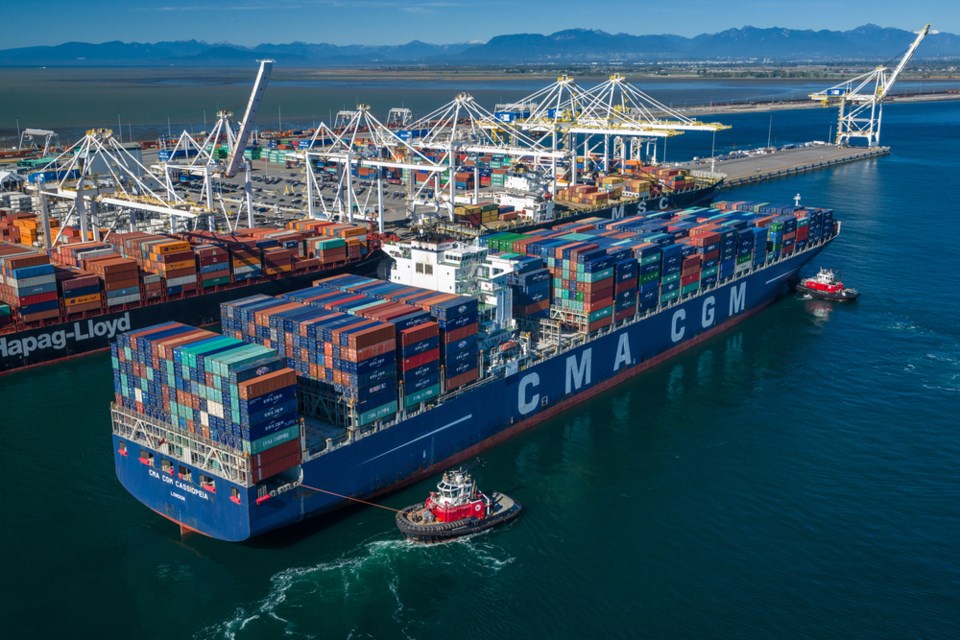
Built on a new man-made island adjacent to the current Deltaport container facility, the port authority project seeks to add a three-berth marine container terminal, a widened causeway that would expand road and rail lines, and an extended basin for tugboats.
The expansion is forecast to grow container capacity on Canada’s West Coast by a third. Without it, the federal government says $3 billion in added GDP would be put at risk by capacity shortages.
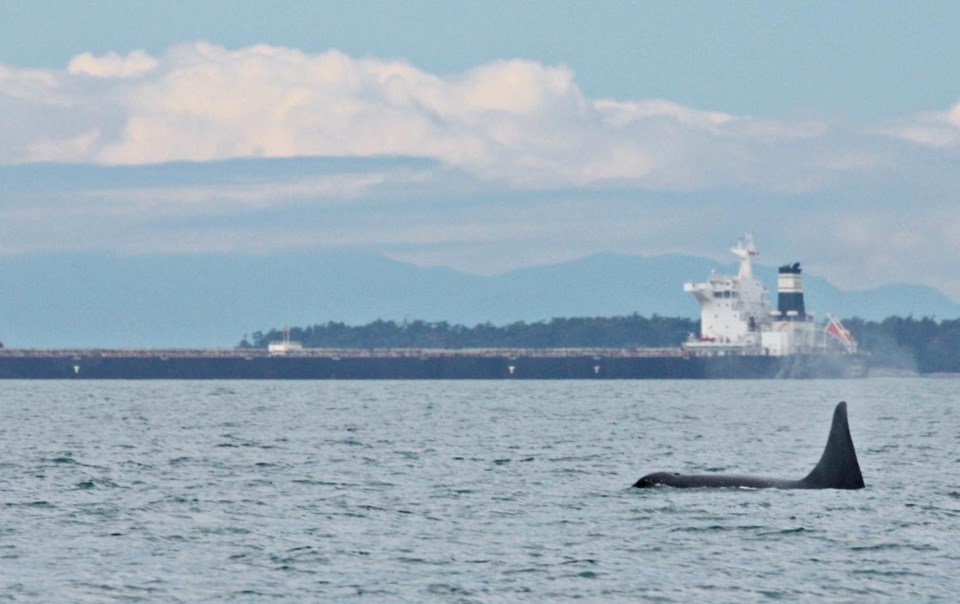
The expansion has also raised serious questions over how it would impact the area's marine environment, including salmon fisheries and larger mammals that feed on them.
Friday's federal court decision is the latest in a string of failed legal challenges against the terminal expansion.
In 2024, several environmental groups took Ottawa and the port authority to federal court over the terminal expansion, arguing its approval would threaten to push southern resident killer whales to extinction.
The court ruled in favour of the government and port, finding the cabinet had the authority to decide what was ultimately in Canada’s interest.
Canada’s federal cabinet later declined a recommendation from two ministers to issue an emergency order that would protect endangered southern resident killer whales off the coast of British Columbia.
That decision came after ministers of the environment and fisheries carried out a November 2024 risk assessment that found the whales face “imminent threats” to their survival and recovery.
For the Lummi Nation, its cross-border legal challenges are far from over.
In September, the Lummi Nation filed a separate challenge against the province in B.C. Supreme Court, alleging they were unfairly excluded from environmental assessments for other major infrastructure projects in the Lower Mainland.
Those projects included the Pattullo Bridge replacement, connecting Surrey and New Westminster, and the George Massey Tunnel replacement along Highway 99.