(open.substack.com)
Note from the author: I had planned a different piece for early next week, but the recent Americans for Safe Aerospace white paper crystallized something I’ve been circling in every essay here: High strangeness forces the turn inward; Not away from reality, but toward a deeper understanding of it. The phenomenon doesn’t just challenge what we know; it tests whether we can hold space for each other’s impossible experiences, whether we can develop collective capacity for the numinous, and whether we’re ready to walk the maze collectively instead of demanding each witness navigate it alone.
This piece examines the crisis that keeps us from that shared journey: our civilizational failure to believe one another. It’s the empathy test hidden inside the ontological one, and we’re failing it. We’ve created a false hierarchy where objective data is the only “real” evidence and subjective testimony is worthless - yet the most profound aspects of contact may exist precisely in that subjective space we’ve learned to dismiss. The lived transformation of the witness, the consciousness-altering encounter, the ontological shattering; These aren’t unfortunate side effects we need to strip away to get to the “real” data. They may be the data itself.
John Mack understood this. He recognized that trying to force these encounters into purely objective categories was missing the point entirely. The phenomenon appears to operate at the intersection of material and consciousness, and our insistence on privileging one over the other keeps us from understanding what’s actually happening. Every other theme I explore here from consciousness as fundamental, the collapse of inner and outer, the initiatory nature of contact, it all depends first on this: can we learn to honor each other’s encounters with the strange? Can we recognize that subjective experience isn’t a lower form of evidence but a different kind of knowing, one that may be essential for grasping what we’re facing?
I needed to get this out now because it names the barrier that keeps us trapped in our narrative loops, unable to reach the center of the maze where transformation waits.
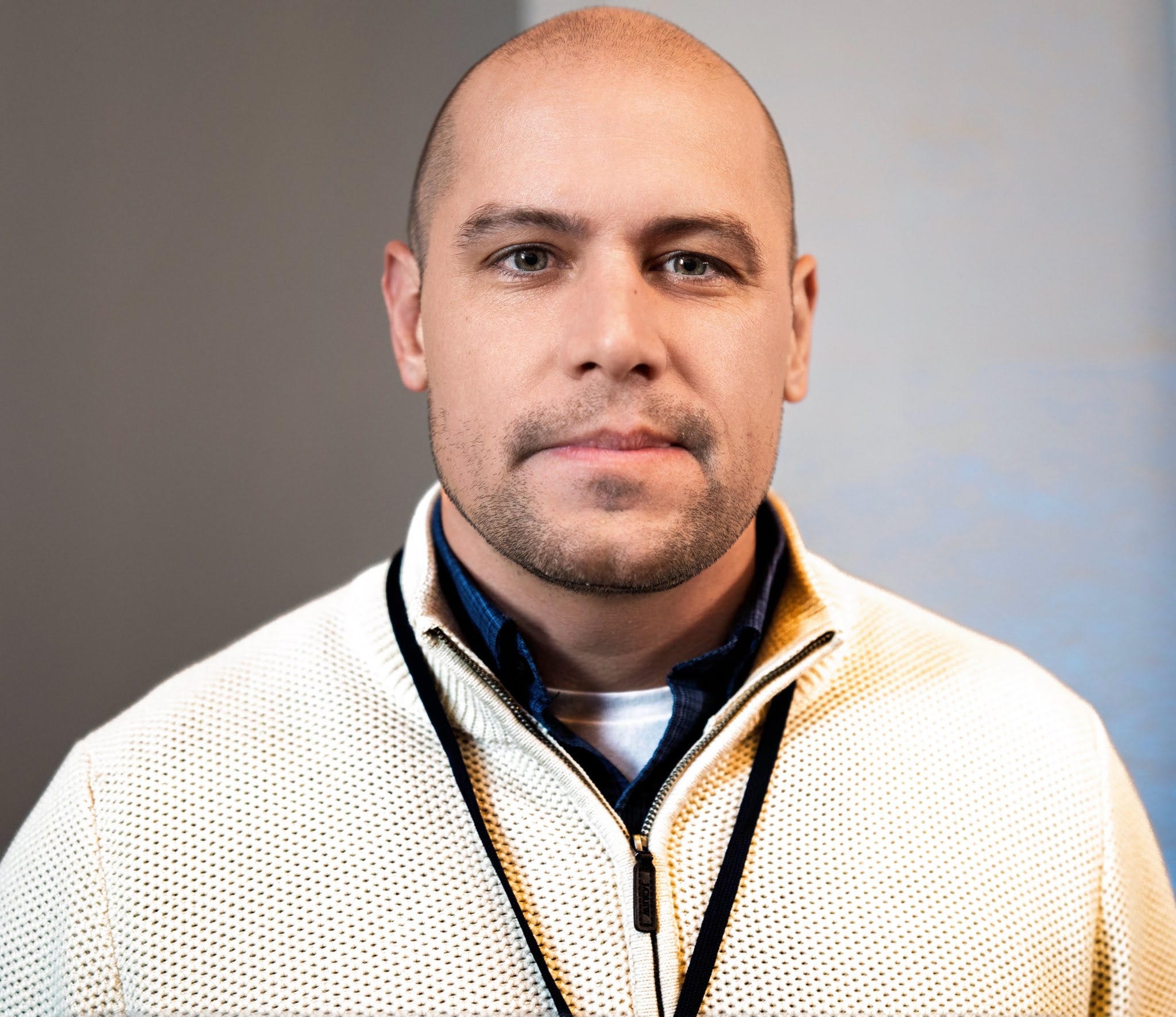
Mark Spearman, Ryan Graves at SOL Symposium, 2024. IG: spearmanmark
It was 2014, off the coast of Virginia Beach in Warning Area W-72, an exclusive block of airspace ten miles east of the shore. Two pilots from VFA-11, the Navy’s Red Rippers squadron, were conducting routine air combat training in their F/A-18F Super Hornets when they encountered something that would force them to terminate their mission.
A dark gray cube suspended inside a clear sphere, estimated between five and fifteen feet in diameter.
The object remained stationary despite hurricane-force winds at altitude. It shouldn’t have been able to fly at all. There were no visible means of propulsion, no exhaust, no wings. The pilots took evasive action and submitted a safety report. There was no official acknowledgment. No follow-up. No mechanism to report what they’d seen without risking their careers.
This wasn’t an isolated incident. As Ryan Graves, former F/A-18 pilot and founder of Americans for Safe Aerospace, would later testify to Congress:
“Over time, UAP sightings became an open secret among our aircrew. They were a common occurrence, seen by most of my colleagues on radar and occasionally up close. The sightings were so frequent that they became part of daily briefs.”
Survey data now shows that 45% of pilots have witnessed UAP. Nearly half of all commercial and military aviators. Yet according to the recent white paper published by Americans for Safe Aerospace, only 5-10% of pilot UAP sightings are actually reported. The other 90% stay silent.
These pilots have both objective and subjective data; The radar track and the lived experience of witnessing something that defies our understanding of physics. They have the instruments and the story. Multiple sensor confirmations and the memory of what they saw with their own eyes.
But as Graves testified, what they tell us often begins with an apology:
“I apologize, I realize this will sound crazy.”
The silence isn’t what most people think. Pilots don’t stay quiet because they fear ridicule at the water cooler. They stay silent because FAA medical certification regulations can classify an unverified aerial observation as evidence of psychological instability.
This is what Americans for Safe Aerospace calls the “aeromedical trap”: when a pilot reports seeing something and radar shows nothing (or when the data is there but officially unacknowledged) that observation can be documented as a potential hallucination. This triggers psychiatric evaluation and months of grounding without pay. For commercial pilots whose livelihoods depend on their medical certification, this isn’t a theoretical risk. It’s a career-ending trap door.
“It is difficult to get a man to understand something when his salary depends upon his not understanding it.”
Upton Sinclair
Harvard psychiatrist John Mack discovered this mechanism from the other side. When he began simply believing the contact experiencers he interviewed, Harvard initiated an unprecedented investigation into his tenure. As Mack would later reflect, he had violated an unspoken rule about the boundaries of acceptable reality: “I was interfering with the way we think about reality itself”.
The parallel is exact: pilots risk their careers for reporting what they see, while the psychiatric professional who dared to believe them risked his. The system polices belief from both directions.
Dr. Iya Whiteley, an Aviation and Space Psychologist with the AIAA UAP Integration and Outreach Committee, has documented the toll this silence takes. Her work identifies common occupational health consequences of UAP events: social isolation, psychological distress, self-doubt, and career-related anxiety including fear of job loss.
When 45% of pilots have seen something extraordinary, when the data exists on multiple sensor systems, when trained observers with decades of experience are reporting objects operating at impossible altitudes performing impossible maneuvers—and 90% of them stay silent—we haven’t just failed these individuals. We’ve created a massive blind spot in both aviation safety and our understanding of what’s actually happening in our skies.
As Graves put it in his congressional testimony:
“These sightings are not rare or isolated; they are routine.”
Those brave enough to speak discover a cruel irony: the very system meant to investigate these phenomena first demands they sort their experience into rigid predetermined boxes. Their lived encounter gets stripped down, sanitized, and redefined to fit our models of what’s possible. And in this brutal compression of human experience into neat categories, we lose something precious: the truth of their experience, the depth of their transformation, and the chance to truly understand what’s happening.
As Grace Hopper once observed: “The most damaging phrase in the language is ‘We’ve always done it this way”. Our stubborn clinging to “what we know is possible” has become the very barrier that keeps experiencers trapped in their private hell.
This crisis of belief isn’t unique to aviation. Medicine faced an identical challenge and solved it. The story of how we learned to believe patients about pain offers a roadmap for what we’re failing to do with UAP witnesses.
Physical pain cannot be objectively proven. It cannot be measured, quantified, or detected on any medical device. Pain exists in a strange liminal space between objective and subjective reality. We can observe its shadows: an elevated heart rate, or increased blood pressure. We can watch as pain reshapes a person’s expression, hear it catch in their voice, trace its presence in the way a person tenses their body. But pain remains a private, intimate experience that can never be directly measured or quantified by an observer. We can only infer its existence through these echoes of suffering.
Like consciousness itself, pain is something that can be witnessed only by the person experiencing it. Yet we have learned to trust these reports of private experience, to treat them as real and worthy of response, even though we can never directly verify them.
For centuries, pain was the ghost in medicine’s machine, the subjective intruder in a world desperate for objective truth. There was no blood test for agony, no scan that could capture suffering. Doctors often dismissed patients’ pain reports, particularly from women and people of color, as exaggeration or attention-seeking. The inability to prove pain made it easy to disbelieve.
Yet today, pain is considered the fifth vital sign, as crucial as heart rate or blood pressure. I teach my nursing students a sacred principle: Believe your patients. Trust their story. Honor their experience. When someone tells you they are hurting, you heal them.
John Mack made precisely this leap in his work with contact experiencers. A Pulitzer Prize-winning Harvard psychiatrist, Mack began his investigation expecting to find psychological explanations for abduction accounts. Instead, he found coherent, credible people reporting transformative encounters that defied conventional explanation. As he later wrote: “I was a double-blind doctor practicing in a single-blind universe”. His willingness to take experiencers seriously, to believe the reality of their encounters even when they shattered his worldview, represented the same epistemological courage medicine had shown with pain.
This is the paradox at the heart of modern medicine: some of the most real and significant experiences in human life can never be proven to another human being, only believed.
This represents a profound epistemological shift. We made a civilizational choice to trust subjective testimony about pain because we learned the hard way that dismissing these experiences causes harm and sometimes fatally. We recognized that the inability to measure or quantify an experience does not diminish its reality or impact.
The principles of non-maleficence (”do no harm”) and beneficence (”do good”) form the moral bedrock of medical practice, guiding healthcare professionals in their sacred duty to patients. Non-maleficence asks that caregivers carefully weigh every intervention against its potential risks, ensuring their actions do not cause undue harm or suffering. Beneficence compels healthcare providers to be empathetic, kind, merciful, and actively do good.
Together, these principles create a dynamic ethical framework that acknowledges both the power and responsibility inherent in medical practice. When treating patients, there is an eternal balancing act between these dual obligations: avoiding harm while simultaneously striving to provide beneficial care. This careful consideration becomes especially crucial when sailing unknown waters, dealing with complex or unusual cases where standard protocols may not exist.
Central to this moral architecture is the fundamental act of faith in believing patients’ lived experiences, while patients in turn must trust their caregivers’ commitment to their wellbeing. This belief is fundamental to modern medicine: the trust between caregiver and patient, the sacred space where one human’s suffering meets another’s compassion.
But what happens when a patient’s experience challenges more than just our medical knowledge; When it threatens our very understanding of reality? Our ontology (our understanding of how reality works) forms the bedrock of how we move through the world. It’s the invisible architecture that shapes every thought, every decision, every interpretation. It is the window through which we perceive the world.
Most of us move through life never questioning this framework, like fish unaware of the water they swim in. We simply assume our model of reality is complete, that the boundaries between possible and impossible are fixed and known. But what happens when we encounter something that threatens to bend or even break that framework entirely? When an experience suggests that our fundamental assumptions about reality, and about what is possible and what is not, might be incomplete?
John Mack called this “ontological shock”: the shattering experience of encountering something that shouldn’t exist according to our model of reality. As he observed:
“The phenomenon seems to be about stretching or shattering our consensus reality.”
This isn’t merely about updating our knowledge; it’s about discovering that the entire framework we use to organize knowledge might be inadequate.
This isn’t just about adding new facts to our existing knowledge. We spend years building our ontology through education and experience, only to discover that what we’ve constructed, our entire model of reality, might be too small.
Our drive as humans to categorize and systematize (while necessary for communication and understanding) can blind us to experiences that don’t fit our preexisting frameworks. Just as a clinician might dismiss symptoms that don’t match known conditions, our ontological categories can make us miss aspects of reality that fall between our conceptual cracks.
Mack encountered this repeatedly in his work. Experiencers would describe encounters that were simultaneously physical and psychological, and that occurred in consensus reality yet also seemed to transcend it. As he came to understand, the phenomenon appeared to be “ontologically ambiguous by design”, operating at the intersection of material and consciousness in ways that defied our either/or categorization.
This is precisely what happens with UAP witnesses. Just as pain exists in a subjective space that standardized medical scales fail to truly capture (”rate your pain from 1-10” barely scratches the surface of such a complex experience), witnesses to high-strangeness events often express frustration at how their experience gets flattened when forced into conventional descriptive frameworks. They describe the experience as realer than real, feeling far more vivid, complex, or even contradictory to established reality.
This points to a deeper issue: our categorical systems might be fundamentally inadequate for certain aspects of reality.
Just as pain exists in a deeply personal realm that defies simple categorization, influenced by cultural, psychological, and physiological factors, UAP encounters similarly transcend conventional classification systems. In both domains, we must rely heavily on witness testimony and trust, working to understand experiences that often lie outside standard frameworks.
Pain assessment taught medical professionals that the inability to measure or quantify an experience does not diminish its reality or impact. Similarly, UAP encounters, while often defying current scientific measurement tools, demand the same careful attention and respect for experiencers’ accounts.
But just as we’re beginning to recognize this crisis of belief, we’re actively making it worse. We’re building technology that gives us permission to never believe anyone again.
Enter artificial intelligence and deepfake technology: the ultimate amplification of our inability to trust each other. Every video can be faked. Every image manipulated. Every audio recording synthesized. We’ve created the perfect excuse for dismissal: “I don’t believe you because I can’t believe you. Reality itself has become unfalsifiable”.
This is more than an evidence problem. When 45% of pilots have instrument readings confirming UAP encounters yet 90% still stay silent, when we’ve built technology specifically to undermine testimony, we reveal something profound about our civilizational capacity for relationship.
We’re becoming a species that literally cannot believe one another. And not because evidence is lacking, but because belief itself has become intolerable.
The phenomenon may be getting stranger in response to our increasing technological ability to dismiss the strange, like a spiritual immune response to our epistemological illness. Perhaps this (not our nuclear weapons, not our environmental destruction, not our technological immaturity) is the real test. Can we learn to trust each other again?
So what’s the alternative? How do we rebuild the capacity for collective belief? Indigenous epistemologies offer a radically different approach; One we dismissed as primitive but might actually be more sophisticated than our own.
Many Indigenous cultures operate from relational ontologies where reality is co-created through relationship and witnessing. They have protocols for honoring others’ experiences with the non-human, for holding space for encounters that challenge consensus reality. These aren’t superstitions, they’re sophisticated epistemological frameworks that acknowledge some truths can only be accessed through relationship, through the sacred act of believing another’s testimony about what they’ve experienced.
Aboriginal Australians maintained protocols for navigating the Dreamtime; A dimension that transcends linear time and space where ancestral spirits reside. The Wandjina, supreme creator beings depicted in rock art spanning thousands of years, exist simultaneously in past, present, and future. They communicate through dreams, visions, direct knowing. The distinction between “then” and “now” is itself recognized as a construct of limited perception.
These traditions teach something we’ve forgotten: some intelligences don’t come from elsewhere. They’re already here, woven into the fabric of reality itself, operating at frequencies our consensus worldview filters out. Indigenous peoples maintained ways of perceiving them, communicating with them, understanding that reality has more dimensions than materialism acknowledges.
This isn’t about abandoning discernment or critical thinking. In pain management, healthcare providers don’t accept every claim uncritically. They assess, correlate with other signs, and use clinical judgment. But the foundation is belief: I believe you are experiencing what you say you’re experiencing. There’s a profound difference between discernment and dismissal, between healthy skepticism and what we might call ontological violence; The dismissal of experiences that threaten our worldview.
Mack understood this distinction intimately. His approach wasn’t credulous acceptance but what he called “radical empiricism” - taking experiences seriously as data, even when they challenged every assumption about reality. As he noted, the real question wasn’t whether these encounters “really happened” in some objective sense, but rather: “What is the nature of a reality in which such experiences occur?”.
Perhaps the phenomenon operates from a relational ontology. Perhaps it only fully reveals itself to consciousnesses capable of reciprocal relationship, to civilizations that have learned to believe and honor each other’s experiences. Maybe the strangeness isn’t a bug but a feature, designed specifically to sort between those who can sit with uncertainty together and those who retreat into rigid dismissal.
The relational ontologies of Indigenous cultures reveal something we’ve lost. Young children struggle with theory of mind: the developmental capacity to understand that other people have genuine inner experiences different from their own. It’s a crucial milestone, the recognition that consciousness exists beyond the boundaries of one’s own skull.
Perhaps we’re facing the same developmental challenge at civilizational scale. We have collective theory of mind failure: an inability to truly believe that other people’s consciousness encounters reality in ways that might be valid even when they differ radically from our own experience.
The Fermi Paradox asks: “Where is everybody?”. But maybe they’re here. Maybe making contact with a species that won’t even believe its own members’ experiences would be like trying to have a conversation with someone experiencing psychosis. You can’t have first contact with a civilization that can’t achieve internal contact, and that can’t create conditions where its own members feel safe reporting what they’ve witnessed.
As Graves testified, commercial aircrew who witness UAP are extremely frustrated that there is no reporting system and no protections against retaliation. They are hesitant to discuss anything “weird” on the radio with air traffic control or in any official company forum. When experience becomes atomized rather than held collectively, we lose access to shared reality. We’ve moved from “let’s figure out together what this means” to “you’re on your own with your impossible experience”.
This mirrors what ecologist Garrett Hardin called the tragedy of the commons. When we can’t collectively hold space for experiences that challenge our worldview, we lose access to entire domains of reality.
Here’s what’s crucial: I’m not suggesting we abandon objective data. The pilots have both: the instrument readings and the lived experience. The problem is we’ve created a hierarchy where objective data is the only “real” evidence, and subjective testimony is worthless unless corroborated. But what about when it is corroborated and we still don’t believe?
Pain assessment taught medical professionals that we need both forms of data working together. The vital signs and the patient’s report. The observable and the subjective. Not one or the other, both/and.
Mack’s framework offers exactly this integration. He recognized that the phenomenon operates at the intersection of material and psychological reality; That trying to force it into purely objective or purely subjective categories was the problem itself. The encounters were neither “just” physical nor “just” psychological. They were both/and, revealing the artificial nature of our Cartesian split between matter and mind.
The AIAA UAP Integration and Outreach Committee’s reporting guidance explicitly calls for pilot and aircrew subjective reports to be correlated with objective ground and aerospace-based sensor data. This represents a crucial recognition: we need both epistemological approaches working in concert.
What if anomalous experiences require the same expansion? The radar returns and the consciousness-altering encounter. The physical evidence and the transformation it catalyzes in the witness. The craft and the telepathic communication. The cube inside the sphere and the way it shouldn’t exist but does.
As Carl Jung understood:
“The universe is a mirror, and what we see in it depends on who we are.”
Jung recognized something crucial about the relationship between observer and observed: that reality isn’t just “out there” waiting to be objectively measured. It’s co-created between perceiver and perceived. This is precisely what modern pain medicine discovered when it made the leap to believing patients, what Mack discovered in his work with experiencers, and what UAP research must learn.
The current fixation on physical craft, government disclosure, and material evidence in UAP research represents a peculiar form of reductionism that sidesteps the phenomenon’s most profound implications. When we dismiss the reality-bending encounters that leave witnesses fundamentally altered, their consciousness expanded, their understanding of existence shattered and reconstituted, we aren’t just ignoring data points; we’re avoiding the mirror these experiences hold up to our own humanity.
The high-strangeness aspects of UAP encounters - the time distortions, the telepathic communications, the sense of touching something beyond our comprehension - it all speaks directly to questions of consciousness and reality that have haunted humanity since we first looked up at the stars. These encounters suggest that the phenomenon may be less about objects in our skies and more about the nature of perception, consciousness, and our collective journey toward a more emotionally intelligent and spiritually mature civilization.
Maybe disclosure isn’t an event but a practice; The daily practice of believing each other into a new consensus reality. Maybe first contact doesn’t happen when a craft lands on the White House lawn but when we develop the collective capacity to truly hear and honor each other’s profound encounters with the unknown.
Graves has witnessed this firsthand. He testified:
“My lived experience over the past few months has been that as stigma is pushed back and witnesses develop trust in the process, remarkable accounts begin to emerge.”
This is the key insight: belief creates the conditions for testimony, and testimony creates the possibility for collective understanding. But we have to choose to believe first.
Our collective growth as a species hinges on our ability to truly hear and honor these profound human experiences, rather than dismissing them in favor of data that fits neatly into our current paradigm. By clinging to a nuts-and-bolts interpretation that prioritizes radar data and infrared footage over lived human experience, we not only reveal our own materialist biases but also stunt our potential for what we might call evolutionary empathy or the capacity to deeply understand and validate the transformative experiences of others, even when they challenge our worldview.
The phenomenon (whatever it is, wherever it comes from) may be functioning as a mirror, reflecting back our capacity for relationship, wonder, and trust. The high-strangeness aspects, the reality-bending qualities, the way it seems to respond to consciousness itself - perhaps these aren’t obstacles to understanding but invitations into a different kind of knowing. One that requires us to embrace the full spectrum of human experience, even its most mysterious and challenging aspects.
The principles of non-maleficence and beneficence that guide medical practice suggest a path forward. Perhaps we need similar principles for our collective epistemology: First, do no harm; Don’t dismiss or pathologize experiences simply because they challenge your ontology. And second, do good; Actively create conditions where people feel safe sharing their encounters with the unknown.
Americans for Safe Aerospace’s Witness Program was formalized to ensure each encounter is systematically documented without bias. They offer judgment-free reporting and provide witnesses a stigma-free avenue to share their experiences without fear of personal or professional repercussions. This represents a small but crucial step toward the kind of civilizational maturity that might be required.
As Graves noted:
“The stigma attached to UAP is real and powerful and challenges national security.”
But the stigma does more than challenge security. It challenges our very capacity to function as a mature civilization capable of collective sense-making in the face of the unknown.
Maybe they’ll land on the White House lawn when we learn to land in each other’s living rooms with compassion. When we develop the collective capacity to say: “I believe you had this experience AND I don’t yet know what it means. Let’s sit with that uncertainty together”.
That holding of both belief and unknowing may be the very practice that opens us to contact.
Mack understood this profoundly. Near the end of his life, he reflected that the phenomenon might be a kind of “cosmic curriculum”; That contact experiences were fundamentally pedagogical, designed to expand consciousness and challenge our limited conception of reality. The real question, he suggested, wasn’t about proving these encounters happened, but about developing the maturity to receive what they’re trying to teach us.
Until we can learn to honor one another’s experiences enough to believe one another (really believe, not just tolerate) perhaps large-scale contact remains impossible. Or perhaps more accurately: perhaps we’re not yet capable of recognizing contact when it’s already happening, because we haven’t learned to believe the witnesses who are trying to tell us it’s here.
Can we live in a relational universe full of reciprocity, or are we too individualistic and closed to play well with other forms of intelligence? The phenomenon may not be testing our technology or our weapons systems. It may be testing something far more fundamental: our capacity for collective belief, for honoring each other’s consciousness, for sitting together in the unknown.
When 90% of unusual aerial observations by trained observers go unreported, we have both a massive blind spot in aviation safety data and a moral crisis; An inability to see that our failure to believe each other might be the very thing keeping us from the understanding we claim to seek.
We’re failing this test. But failure, like pain, can be medicine if we’re willing to learn from it.
The question is: are we ready to take that leap of faith?
Note: The statistics and framework cited come from Americans for Safe Aerospace’s 2025 white paper “Pilot UAP Reporting and Career Consequences: A Regulatory Analysis” and the AIAA UAP Integration and Outreach Committee’s research on occupational health consequences of UAP reporting. Testimony from Ryan Graves is drawn from his Congressional testimony to the House Oversight Committee in July 2023 and his written testimony to Congress. References to John Mack’s work draw from his books “Abduction: Human Encounters with Aliens” (1994) and “Passport to the Cosmos” (1999), as well as documented accounts of the Harvard investigation into his research.