(abcnews.go.com)
A Georgia mother was heartbroken when her pregnant daughter was declared brain dead, only to find herself in what she described as "a nightmare" for months as her daughter was kept on life support and later gave birth to a premature grandson who is now fighting for his life.
April Newkirk's daughter, Adriana Smith, was nine weeks pregnant when her health declined. Smith went to a hospital in early February with bad headaches and was given prescription pain killers safe for pregnant women and sent home, Newkirk told ABC News' Rachel Scott in an interview for "Nightline" that aired on Tuesday.
Then, her health got worse -- she became unresponsive and was gasping for air, according to Newkirk. She was rushed to a different hospital, part of the Emory Healthcare System, where a CT scan revealed she had blood clots "everywhere," Newkirk said.
Doctors waited a day to monitor her health and run tests, but she never woke up. Smith was declared brain dead on Feb. 19, according to Newkirk.

Adriana Smith is seen in this undated photo.
Courtesy April Newkirk
But, because she was pregnant and the fetus's heart was still beating, doctors told Newkirk that they needed to keep Smith on life support, she said.
"They said that they would treat the baby as the patient, and she was no longer the patient, because of the law that they have here in Georgia," Newkirk said.
In initial statements in May, Emory Healthcare said they make "individualized treatment recommendations in compliance with Georgia's abortion laws and all other applicable laws."
In a recent statement to ABC News, the hospital did not mention abortion laws.
"We have made a request to Adriana’s surrogate to waive our legal confidentiality obligations to allow us to speak about Adriana’s care, and to address any inaccuracies; that request was denied," it said in part.
"Because of this, we can only say that our clinicians use vast experience, consensus from clinical experts, medical literature and where needed, guidance from multidisciplinary ethics and legal to make the best medical care decisions possible. We are foremost guided by patient autonomy and in situations where patients cannot express their preferences, we rely on their advanced directive, health care agent or legally authorized surrogate decision maker. This extends to health care decisions at the end of life," the statement added.
A Georgia law that went into effect after the U.S. Supreme Court overturned Roe v. Wade in 2022, known as the LIFE Act, bans abortions as early as six weeks of pregnancy, only allowing narrow exceptions for medical emergencies, rape, incest and medically futile pregnancies.
Georgia law also designates fetuses as "living, distinct persons" with the same rights, but the law does not specify what happens if the pregnant person is brain dead.
The Georgia Attorney General's Office told ABC News that "there is nothing in the Life Act that requires medical professionals to keep a woman on life support after brain death. Removing life support is not an action 'with the purpose to terminate a pregnancy.'"

Adriana Smith is seen in this undated photo.
Courtesy April Newkirk
Dr. Vincenzo Berghella, the director of Maternal-Fetal Medicine at Jefferson Health in Philadelphia, studied all 35 known cases of brain death in pregnancy worldwide. He said only four of those cases were in the first trimester, and only two of those babies survived.
"These are very rare cases, very unique cases, and especially when they happen so early in pregnancy ... At nine weeks, chances are, even if you want to continue the pregnancy, that the baby's not gonna make it," he told ABC News.
"One of the reasons I'm very critical about an effort to get this pregnancy to term is there's no protocol, there's no agreed upon method. To be blunt, we don't know what we're doing," he said.
Popular Reads
Newkirk said the family was not given any options.

Adriana Smith is seen in this undated photo.
Courtesy April Newkirk
"Me and her dad, we talked about it, we were like, 'We really don't have a choice. They're going to do what they want to do.' So I was just like, 'Well, maybe she'll come back to us. Maybe she'll find her way back to us,'" Newkirk said.
"I never felt like hope was gone with God, but I did see her changing. I saw her skin changing, her body changing," she added.
Smith was on life support for 16 weeks after she was declared brain dead, according to Newkirk.
In June, Newkirk received a call from the hospital telling her that her daughter was being taken in for an emergency C-section, when she was around 26 weeks pregnant. When she arrived to the hospital, her grandson Chance was born, Newkirk said.
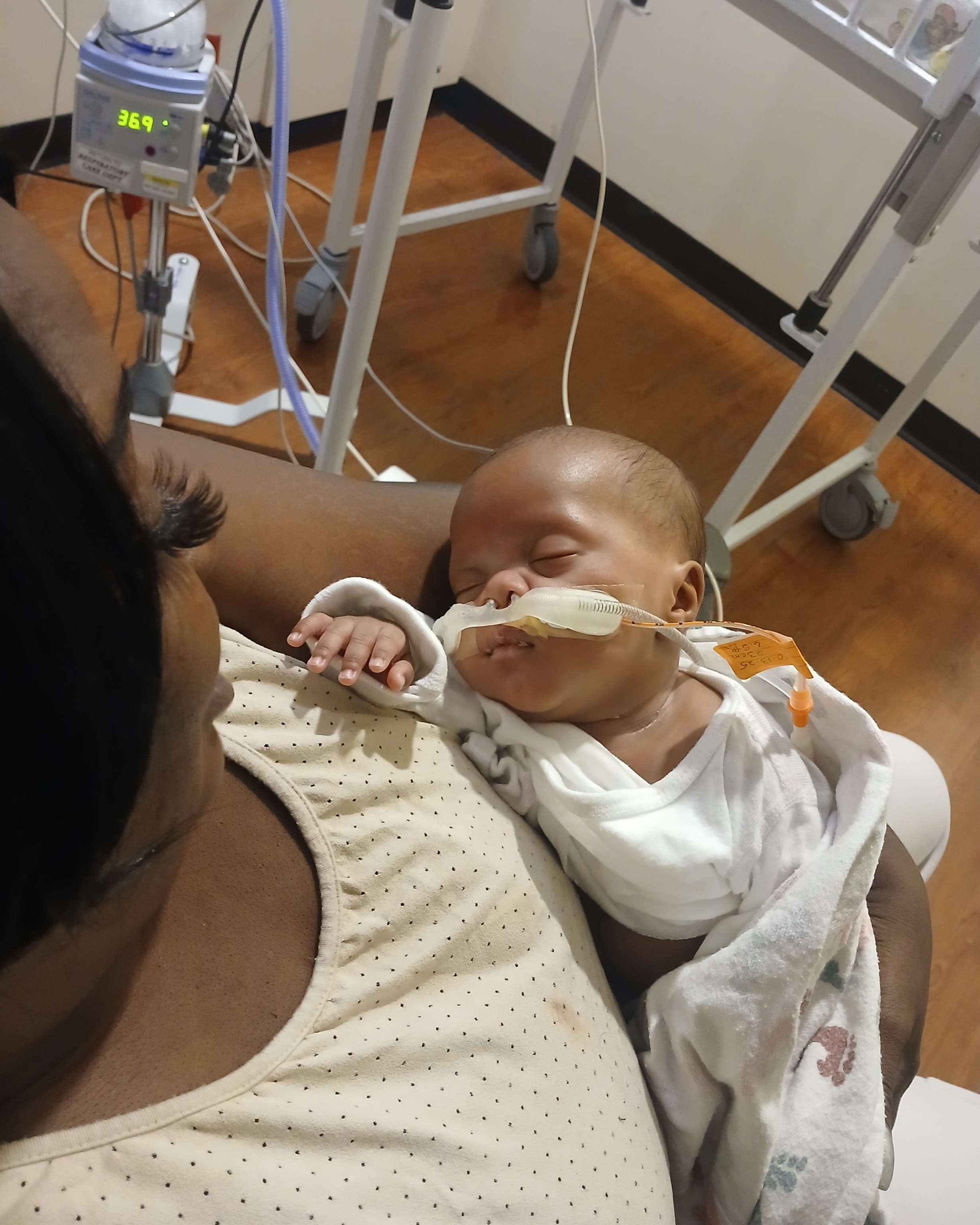
Chance, who was delivered during an emergency C-section, weighed just 1 pound and 13 ounces when he was born.
Courtesy April Newkirk
Smith's newborn child, now 6 months old, is still fighting for his life in the hospital in a NICU, unable to breathe on his own, according to Newkirk.
"His lungs are underdeveloped. ... He's not your regular premature baby," she said. "He's struggling, but he's gaining weight."
However, Newkirk said he is unlikely to go home any time soon. Berghella -- the Jefferson Health maternal-fetal care director -- highlighted some of the challenges faced by premature babies.
"These babies can be months in the hospital, can have lung problems, heart problems, eye problems, ear problems. ... may need to be on oxygen for a long, long time," he said.
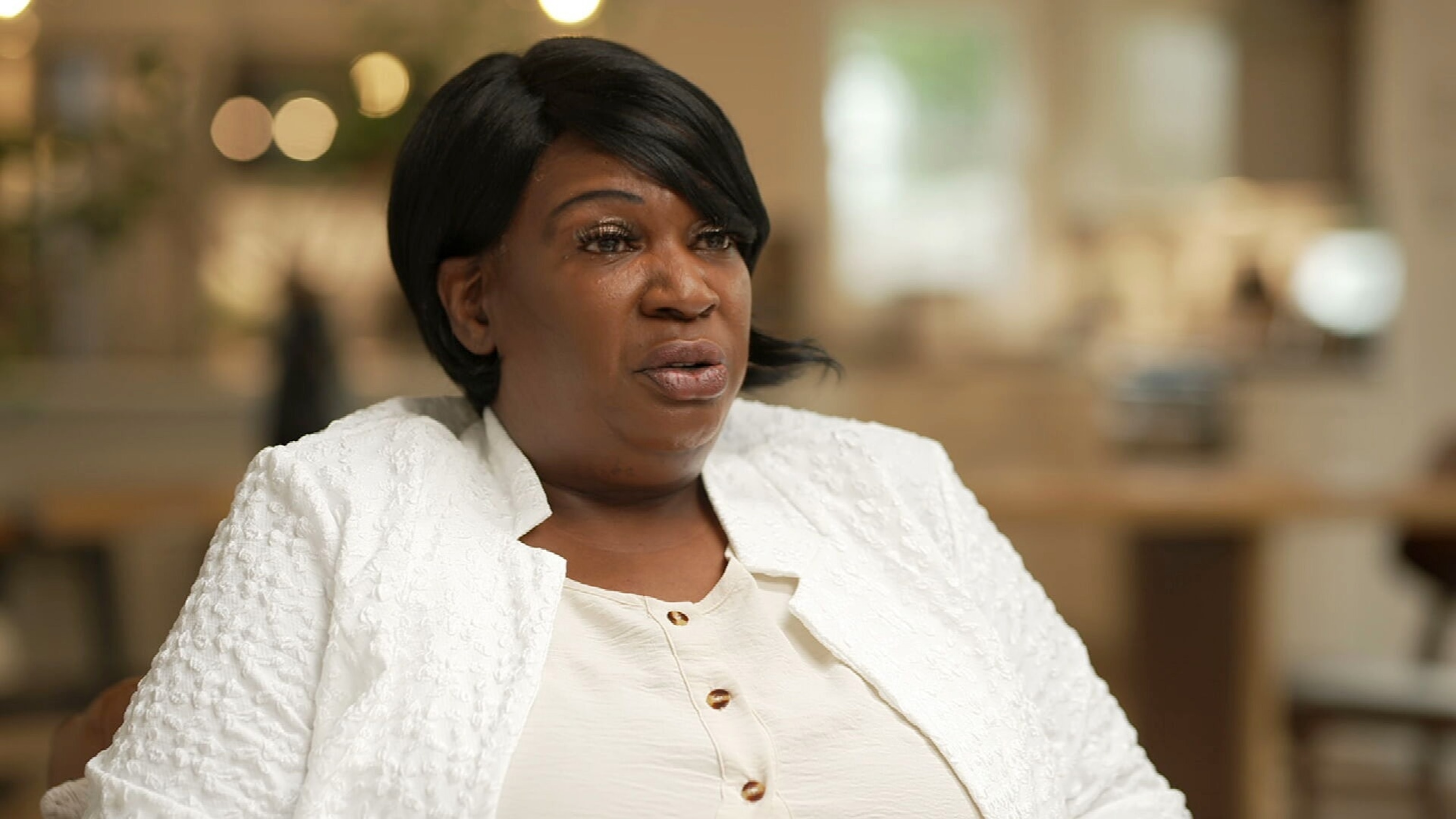
April Newkirk’s daughter, Adriana Smith, was kept on life support for months after she was declared braindead.
ABC News
Smith was taken off of medical ventilation four days after the baby was delivered. Newkirk tearfully described her final goodbyes with her daughter as "hard."
"You just want to scream. ... She's my daughter, my first daughter. ... I think about her every day," she said.
Asked what she thinks her daughter would have wanted in this scenario, Newkirk said, "She would have wanted for her parents to have a choice to make the decisions for her because she couldn't."