
Some iconic phones, like the iPhone 4, light the world on fire and have sales numbers to match. Others may not have sold as many units, but they’re no less beloved. Ask an Android user what the best looking phone of that era was, and most will tell you the same thing—the HTC One M7.
Apple launched the iPhone 4 in 2010 and defined what a smartphone would look like until this day: a solid pane of glass on the front and back, with stainless steel frame along the sides. The phone immediately spawned copycats, and if you see a generic icon meant to depict a smartphone anywhere, often it looks like a miniaturized iPhone 4. The design has become so familiar, it's primarily the smaller size that stands out most about the iPhone 4 today.
The HTC One M7 came three years later, in March 2013, known at the time only as the HTC One. What set this phone apart was that it was a phone with a bold design that was in no way an iPhone imitator. Here was a device an Android user with a taste for premium-feeling hardware could proudly call their own.
The HTC One M7 was not two panes of glass with a metal frame in between. Instead, this phone had an aluminum unibody design. If you touched the phone anywhere other than its screen and camera lens, you touched metal. And the back of the phone? It actually curved to fit your hand.
I owned this phone back in 2013. As a recently married adult fresh out of college, this was the first high-end phone I ever purchased, and it cost me nearly $600. That was a staggering number at the time, but it is what you would pay for the likes of an entry-level Google Pixel 9a or an Apple iPhone 16e today. Yet for my money, I got a phone that still occupies a space in my heart as the boldest phone I ever loved. I wouldn't know what it felt like to love a phone again until the Essential Phone half a decade later.
I miss those dual, front-facing speakers
Part of the HTC One M7’s iconic design can be attributed to its dual front-facing speaker grilles, which were a big selling point of the device. HTC went so far as to give them a name—HTC Boomsound.
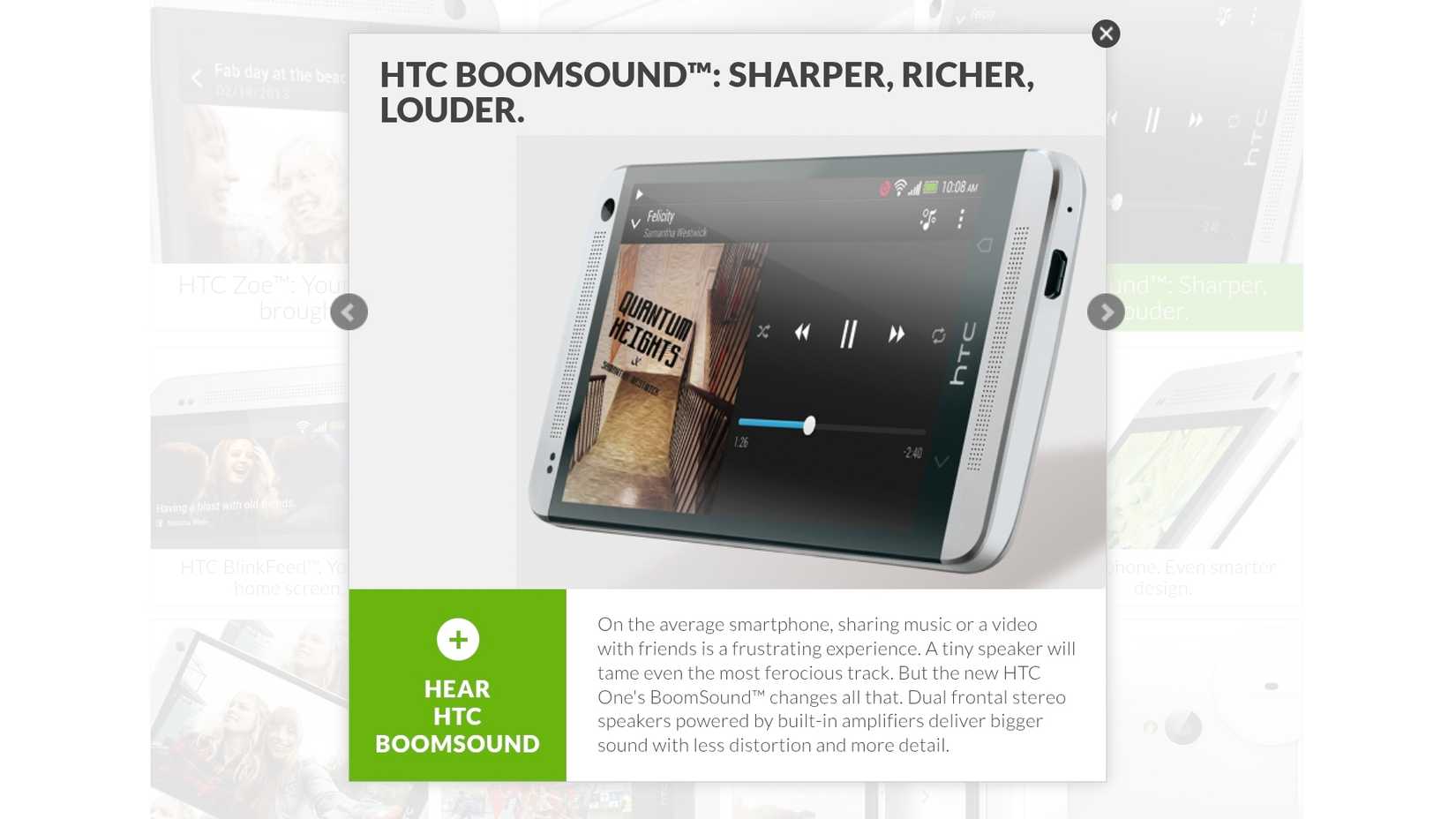
Tacky name aside, this was no gimmick. Those two speakers above and below the screen pumped audio directly toward you as you watched a video or played a game, offering stereo sound. This was a step up from the practice that was common then, as it is now, of only having a single down-facing speaker on one corner of the device.
As much as I appreciate an edge-to-edge display, I’d love to see a phone maker take another shot at releasing a phone that made sound a visual part of its phone’s identity.
A phone that was unmistakable for any other
Those dual speakers milled directly into the aluminum unibody became an instant way to spot the HTC One M7 out in a crowd. It was a phone you could point out on a table from many yards away. This was also true of various other parts of the phone’s design. The phone was just as recognizable when face-down, thanks more to its curved aluminum back than the giant HTC logo emblazoned in the middle.
This was also a phone released during the peak era of smartphone manufacturer skins. Samsung phones came with TouchWiz, LG phones had its own vibe that would eventually become known as LG UX, and the HTC One M7 came with HTC Sense. This was a design whose home screen gave me Windows Phone vibes. I loved the look, which was enough to make it obvious you were seeing an HTC phone when glancing at any screenshot or press image.
This software wasn’t without its quirks. HTC app icons clashed with Google and third-party apps. The phone also lacked a dedicated menu button, so older apps displayed a tacky black bar at the bottom containing a single isolated menu icon. And like most non-Nexus phones, major software updates took a long time to arrive.
The HTC One's camera was its Achilles' heel
Those other annoyances were present but easy to overlook in favor of all the phone’s other strengths. The camera, however, was the phone’s weakest link. As the initial honeymoon phase came to an end and I lived with the phone day in and day out, it was the camera that ultimately convinced me not to stick with future versions of the HTC One, like the eventual M8 or the M9.
At a time when smartphone makers were racing with each other to produce cameras with higher-megapixel counts, HTC doubled down on the stance that megapixels aren’t everything. This is a stance that I agree with, but the phone’s 4MP camera was sadly too low. This was less than a third of the 13MP found on the back of Samsung’s Galaxy S4. It was half the 8MP that the Nexus 5 would have later that year. This was even lower than the 5MP rear camera of the aforementioned iPhone 4 launched three years prior!
Even worse than the lower resolution was the image quality itself. The photos that came out of my HTC One M7 had a blue tint to them whenever the lighting was less than perfect. As a result, there’s an era of my life that now looks like this.
As you can see, the HTC One M7 was capable of taking good photos outdoors, but things quickly fell apart once heading inside.
Sadly, as remarkable as the HTC One was, it did not catch up to the Galaxy S4 in sales, and HTC would report its first quarterly loss later that year. Google would eventually purchase half of HTC’s phone design and research staff, enabling the Pixel brand to deliver the beautiful hardware it offers today.
HTC would go on to sell mid-range phones that were so generic and uninspired that even though the company never fully exited the phone business, more people than not are surprised to hear that it's still around. You can buy a new HTC phone, but it will bear no resemblance to the striking design of the phone that once captured the smartphone world’s imagination.